
What Is Conversion Rate Optimization? A Complete CRO Guide
You Don’t Have a Traffic Problem, You Have a Conversion Problem
Let’s talk about what is conversion rate optimization. Here’s a conversation I have at least twice a week. A business owner calls me and says “Jeremy, we need more traffic. We’re getting 5,000 visitors a month and only 50 leads. If we double our traffic, we’ll double our leads, right?”
📋 Table of Contents
Wrong. Dead wrong.
What if instead of doubling your traffic (expensive, time-consuming, uncertain), you doubled your conversion rate? Same 5,000 visitors, but now you get 100 leads. Same result, fraction of the effort. That’s conversion rate optimization in a nutshell.
After 12+ years building marketing systems for 400+ clients, I can tell you CRO is the most underused growth lever in digital marketing. Most businesses obsess over getting more visitors. The smart ones obsess over converting the visitors they already have.
What Actually Is Conversion Rate Optimization?
Conversion rate optimization (CRO) is the systematic process of increasing the percentage of website visitors who take your desired action. Whether that’s filling out a form, making a purchase, calling your office, or downloading a resource.
The math is simple: Conversion Rate = (Number of Conversions / Number of Visitors) × 100
If 10,000 people visit your website and 200 fill out your contact form, you’ve got a 2% conversion rate. Not great, but we’ll fix that.
What’s Actually a Good Conversion Rate?
The average website conversion rate across all industries hovers around 2-3%. But “average” isn’t the benchmark that matters. I’ve seen well-optimized landing pages hit 15-20% conversion rates. I’ve also seen garbage pages struggle to break 0.5%.
Here’s what I typically see by business type: E-commerce sites usually land between 1.5-3%. B2B lead generation sits at 2-5%. SaaS free trials hit 3-7%. Dedicated landing pages with focused traffic can reach 5-15% or higher.
But honestly, forget the industry averages. The only number that matters is whether your conversion rate is improving month over month. If you’re at 2% and you get to 3%, you just grew your leads by 50% without spending an extra dollar on advertising.
Free 5-Minute Video
See How DeskTeam360 Works in Under 5 Minutes
Watch the short video and see exactly how we handle design, development, and marketing implementation — so you don't have to.
Watch the Video →
Why CRO Trumps Everything Else
Every dollar you spend on SEO, paid ads, social media, and content marketing drives traffic to your website. If your website converts at 1%, you’re wasting 99% of that investment. Improving your conversion rate makes every marketing dollar work harder.
CRO improvements compound over time. If you improve your conversion rate by 10% each quarter, after a year you’ve improved it by nearly 46% cumulatively. That’s serious revenue growth from the exact same traffic.
Plus, it’s more predictable than traffic growth. An algorithm change can kill your organic traffic overnight. A competitor can outbid you on ads. But CRO improvements, better copy, clearer calls to action, faster load times, those are within your control and tend to stick.
The CRO Process That Actually Works
CRO isn’t guesswork. It’s a systematic, data-driven process. Here’s how it works in practice.
Step 1: Understand What’s Happening Now
Before changing anything, understand what’s broken. Google Analytics will show you which pages get the most traffic, where people drop off, and your conversion rate by page, traffic source, and device.
Install heatmap software like Hotjar or Microsoft Clarity. These tools show where people click, scroll, and hover on your pages. You’ll discover that nobody’s scrolling to your call-to-action, or that everyone’s clicking on an image they think is a button.
Watch session recordings of real visitors navigating your site. You’ll see exactly where they get confused, frustrated, or stuck. It’s painful to watch, but incredibly revealing.
Pro tip: If you haven’t set up proper analytics tracking yet, start there. You can’t optimize what you don’t measure. Our guide on setting up Google Analytics walks through the entire process.
Step 2: Find the Biggest Problems
Based on your data, identify the biggest friction points. In my experience, these are the usual suspects: slow page load times (every second of delay reduces conversions by about 7%), unclear value propositions (visitors don’t understand what you offer in the first five seconds), weak or missing calls to action, lack of trust signals like testimonials or reviews, forms with too many fields, and poor mobile experiences.
Don’t try to fix everything at once. Pick the biggest problem on your highest-traffic page and start there.
Step 3: Test Your Fixes
This is where A/B testing comes in. You show different versions of a page to different visitors and measure which performs better. Version A is your current page. Version B is your improved version. Split your traffic 50/50 between them and let the data decide the winner.
Start with high-impact, easy changes on your busiest pages. Don’t test button colors first, test headlines, offers, or form length. Those move the needle much more than micro-tweaks.
Watch out: You need statistical significance before declaring a winner. A test running for three days with 200 visitors isn’t conclusive, even if one version looks better. Most tests need 2-4 weeks and thousands of visitors to reach reliable conclusions.
We break this down further in how to do keyword research for seo: step-by-step guide.
Quick CRO Wins You Can Deploy This Week
While proper CRO requires testing, these improvements help almost universally.
Fix Your Page Speed
This is the highest-impact, lowest-effort improvement for most websites. Compress images, enable caching, minimize code, and use a content delivery network. If your pages take more than three seconds to load, you’re bleeding conversions. Our WordPress speed optimization guide covers the full checklist.
Clarify Your Headline
Your homepage and landing page headlines should answer three questions in five seconds: What do you do? Who do you do it for? Why should they care?
If your headline is vague (“Innovative Solutions for Tomorrow’s Challenges”), replace it with something specific (“Web Design for Small Businesses, Starting at $2,500”).
Add Social Proof Everywhere
Testimonials, review counts, client logos, and case study snippets reduce uncertainty. Place them near your calls to action, that’s where people need reassurance most. Nothing kills conversions faster than uncertainty.
Cut Your Form Fields in Half
Every field you add to a form reduces completion rates. For most lead generation forms, four fields are plenty: name, email, phone, and a brief description of their needs. You can collect additional information later in the sales process.

CRO Tools That Don’t Suck
Google Analytics 4 is free and essential for tracking traffic, behavior, and conversions. Google Search Console shows which searches bring people to your site. For user behavior analysis, Hotjar offers heatmaps and session recordings with a free plan for small sites. Microsoft Clarity provides free heatmaps and session recordings with no traffic limits.
For A/B testing, Google Optimize was the free standard but it’s been sunset. VWO (Visual Website Optimizer) offers a visual editor for creating test variants without coding, plans start around $200 monthly. Optimizely is the enterprise-grade option but comes with enterprise pricing.
Beyond the Basics
Once you’ve handled speed, headlines, and forms, these advanced strategies take optimization further.
Personalization shows different content to different visitors based on their behavior, location, or traffic source. A returning visitor might see “Welcome back, ready to get started?” while first-time visitors see your standard value proposition.
Exit-intent popups trigger when someone’s about to leave your site. Used sparingly with a valuable offer, they can capture leads who would otherwise bounce. The key word is sparingly, one well-timed popup, not an aggressive barrage.
For industry benchmarks and research, see Ahrefs Blog.
For industry research and benchmarks, check out Google Search Central.
We break this down further in how to write meta descriptions that get clicks (with examples).
Businesses that implement proper CRO see 30-50% increases in lead generation within the first quarter, using the exact same traffic they were already getting.
CRO Mistakes That Kill Results
Testing too many things at once is the classic mistake. If you change the headline, image, call-to-action text, and form layout simultaneously, you won’t know which change made the difference. Test one element at a time.
Ending tests too early is another killer. You need statistical significance before declaring a winner. Most tests need 2-4 weeks and thousands of visitors to reach reliable conclusions.
Copying competitors instead of testing is tempting but dangerous. You don’t know if their green button is actually working. You don’t know if their business context matches yours. Test what works for your specific audience.
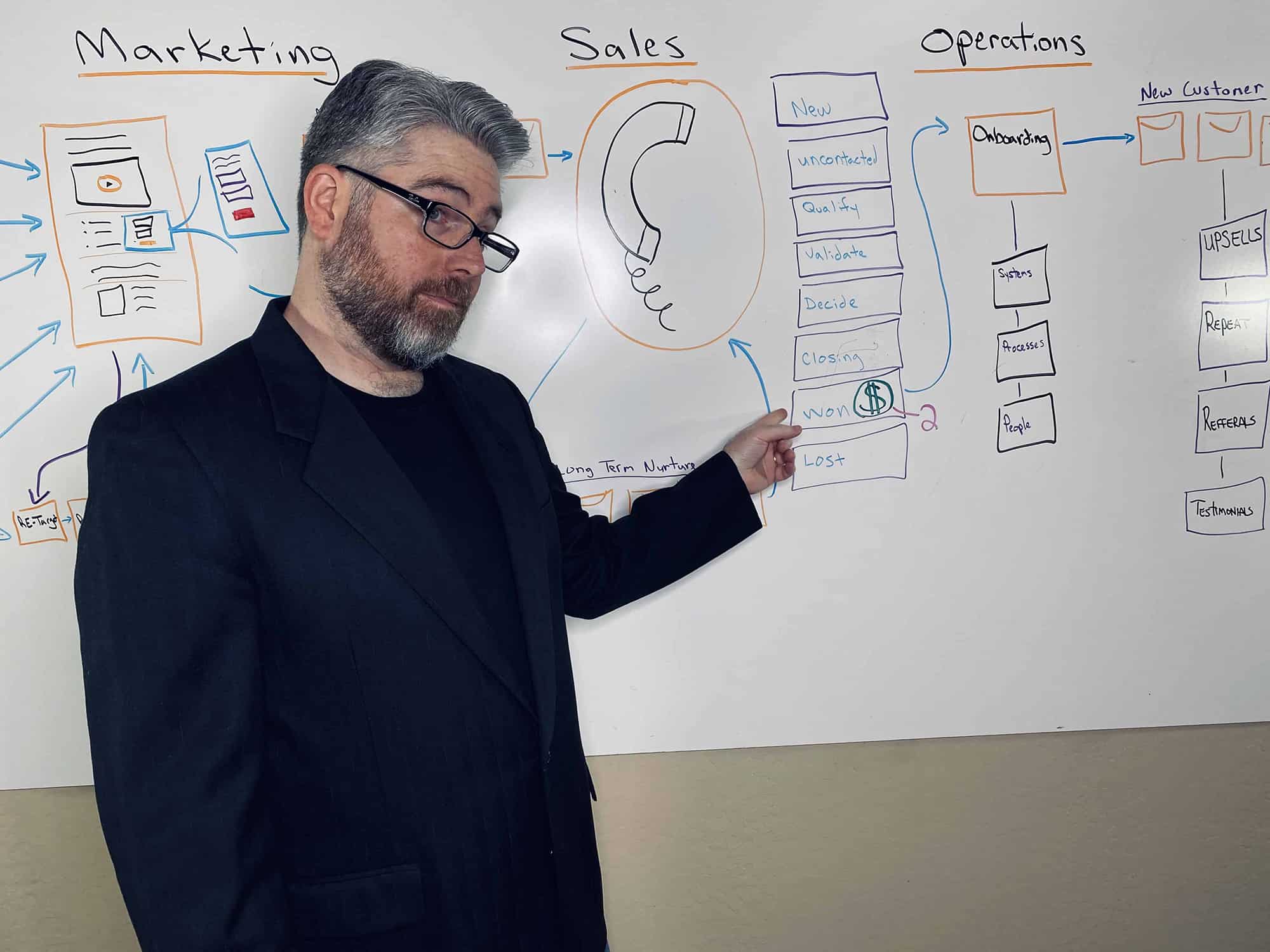
Ignoring the full funnel is a big one. Getting more form submissions doesn’t help if those leads don’t convert to sales. Look at the entire journey from first visit to closed deal and optimize every stage. Our guide on building effective sales funnels digs deeper into this approach.
Start Your CRO Program Today
Set up Google Analytics with conversion tracking if you haven’t already. Install heatmap software to understand user behavior. Audit your top five highest-traffic pages for obvious conversion barriers. Check your page load speed and fix performance issues.
Review your main headlines and value propositions for clarity. Add social proof near your primary calls to action. Simplify your forms to the minimum required fields. Ensure your site works perfectly on mobile devices.
Pick your highest-traffic page and run your first A/B test. Set up monthly tracking for your key CRO metrics. The improvements compound quickly once you start paying attention.
CRO combines strategy with execution. You can identify every optimization opportunity in the world, but someone still needs to design the new landing pages, rebuild the forms, and implement the changes. That’s where the right team makes all the difference.
Most businesses know their conversion rates could be better. The difference between knowing and doing is having a systematic approach and the team to execute it. Focus on the fundamentals first, speed, clarity, trust, and simplicity. The advanced tactics come later, once you’ve mastered the basics.
Your traffic is already costing you money. Make sure it’s actually converting into customers. Understanding how to measure marketing ROI becomes a lot easier when you’re converting visitors at 5% instead of 2%. The math changes everything.
Free Template
The Ultimate Task Delegation Template
Stop guessing what to hand off. This template shows you exactly what to delegate, how to brief it, and how to QA the results.
Get the Free Template →