
How to Create a Sales Funnel: Complete Guide With Real Examples
Knowing how to create a sales funnel can be the difference between growth and spinning your wheels.
📋 Table of Contents
What a Sales Funnel Actually Is (No Marketing Jargon)
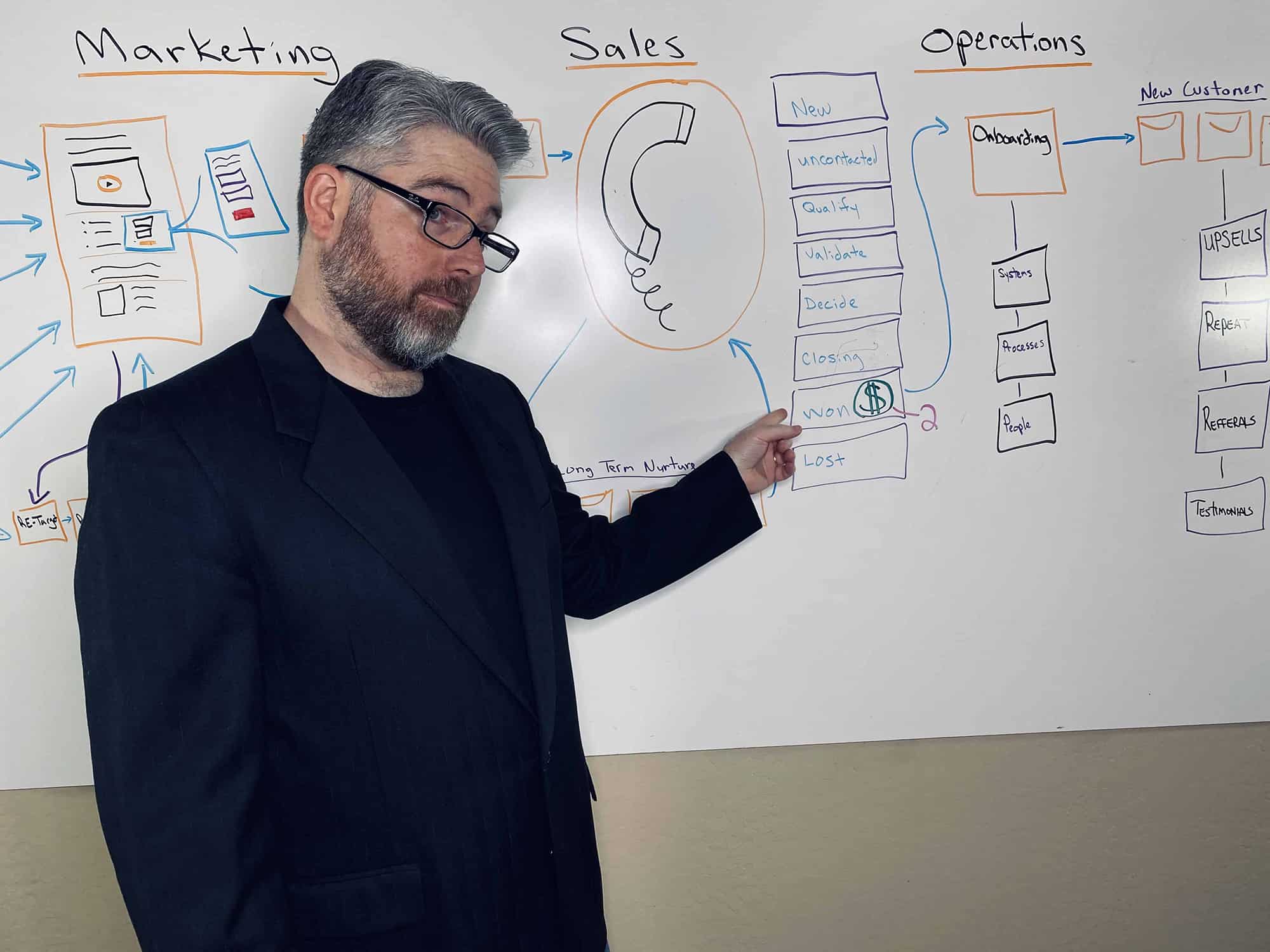
A sales funnel is the path someone takes from “never heard of you” to “take my money.” That’s it. Nothing mystical about it.
Every business has one, whether they planned it or not. The companies that grow predictably vs. those that pray for luck? The growing ones built their funnel on purpose instead of leaving it to chance.
I’ve built funnels for 400+ clients over 12 years. Some were dead simple, two-page affairs that converted at 15%. Others were complex sequences with a dozen touchpoints that took three weeks to complete. But every single one that worked followed the same principle: guide people through a logical sequence that builds enough trust and demonstrates enough value for them to buy.
Here’s exactly how to build one that actually converts.
The Four Stages Every Funnel Needs
Forget all the overcomplicated funnel models you see in marketing courses. Every effective funnel has four stages, period. The tactics change, but these stages don’t.

Stage 1: Awareness (They Discover You Exist)
This is where people first learn you exist. They might find you through Google search results, paid ads on Facebook or LinkedIn, your content on social media, word of mouth referrals, blog posts or YouTube videos, or mentions in media or podcasts.
At this stage, they have a problem but might not know all their options. You’re not selling yet, you’re getting on their radar. Most businesses obsess over this stage and ignore the rest. Big mistake.
What to track: Traffic volume, click-through rates, cost per click
Stage 2: Interest (They Want to Know More)
Now they know you exist and they’re curious. They visit your website, read a blog post, follow you on social media, or give you their email for something useful.
This is where you educate and build trust. You’re nurturing the relationship. Smart businesses use lead magnets like free guides or templates, email sequences that actually help, retargeting ads that stay relevant, case studies and success stories, free consultations or strategy calls, and useful blog content that solves problems.
If how to create a sales funnel is on your radar, this guide is for you. Figuring out how to create a sales funnel doesn’t have to be complicated. Pro tip: Your lead magnet should be something they can use immediately. A 47-page ebook nobody will read is worthless. A one-page checklist they can implement in 30 minutes? That builds trust.
What to track: Email signup rate, content engagement time, return visitor percentage
Stage 3: Decision (They’re Ready to Buy)
They’re actively considering buying from you. They’re comparing you to alternatives, reading reviews, checking pricing, and looking for reasons to say yes or no.
This is where you close. Effective tactics include sales pages with strong copy and testimonials, comparison content that positions you honestly, detailed case studies with specific results, free trials or product demos, limited-time offers that create urgency, and direct sales calls for high-ticket services.
I see too many businesses skip this stage entirely. They go from “here’s a free guide” straight to “buy our $5,000 package.” That’s why their conversion rates suck.
What to track: Sales conversion rate, cost per acquisition, time from lead to close
Stage 4: Action (They Buy and Keep Buying)
They bought. Your funnel doesn’t end here, it evolves. Post-purchase is where smart businesses deliver an exceptional experience, upsell complementary products or services, ask for referrals and reviews, and turn customers into repeat buyers.
Customer acquisition costs money. Customer retention makes money. Most businesses get this backwards.
What to track: Customer lifetime value, repeat purchase rate, referral conversion rate
Existing customers are 5x more likely to buy from you again than new prospects are to buy the first time. Yet 80% of marketing budgets go toward acquisition, not retention.
Free 5-Minute Video
See How DeskTeam360 Works in Under 5 Minutes
Watch the short video and see exactly how we handle design, development, and marketing implementation — so you don't have to.
Watch the Video →
Pick Your Funnel Type Based on What You Sell
Not all funnels work for all businesses. The wrong funnel structure will kill your results before you start. Here’s what works for what.
Lead Generation Funnel
Perfect for: Service businesses, agencies, consultants, coaches, B2B companies
How it works: Traffic hits a landing page offering something valuable for free. They give you their email. You nurture them with helpful content for 2-3 weeks. Then you pitch a consultation or proposal.
Real example: A digital marketing agency runs Google Ads targeting “hire social media manager.” The ad leads to a landing page offering a “Social Media Outsourcing Checklist” (free download). After downloading, prospects enter a 7-email sequence sharing case studies and outsourcing tips. Email 7 has a clear call-to-action to book a free strategy call.
This funnel works because service businesses need to build trust before anyone will pay them thousands of dollars. The free content proves you know what you’re talking about.
Webinar Funnel
Perfect for: Online courses, coaching programs, SaaS companies, high-ticket consultants
How it works: Traffic registers for a webinar. You deliver 45 minutes of genuine value, then spend 15 minutes pitching your program. Follow-up emails include the replay and a time-sensitive bonus.
I’ve seen webinar funnels convert cold traffic at 8-15% from attendee to buyer when done right. The secret is giving away one complete strategy they can implement immediately. Don’t hold back your best stuff.
E-commerce Sales Funnel
Perfect for: Physical products, online stores, subscription boxes
How it works: Traffic hits product pages. You reduce buying friction with clear photos, reviews, and simple checkout. You maximize order value with strategic upsells and cross-sells. Post-purchase emails encourage reviews and repeat orders.
For e-commerce, the funnel is about removing reasons not to buy and increasing average order value. Free shipping thresholds, exit-intent popups with discount codes, and “frequently bought together” sections all increase revenue per visitor.
Tripwire Funnel
Perfect for: Digital products, memberships, online services
How it works: Traffic hits a low-priced offer ($7-$47). After purchase, they see a one-time upsell ($97-$497). An email sequence nurtures them toward your main offer.
The psychology is simple: someone who bought from you once is 10x more likely to buy again. The tripwire covers your advertising costs. The upsell is where you profit. Our guide on reducing bounce rates covers how to keep people engaged long enough to convert.
Build Your Funnel: The Step-by-Step Process
Step 1: Know Your Numbers Before You Start
Before building anything, answer these questions clearly: What’s the main offer you’re driving people toward? Who exactly is your ideal customer (be specific about industry, company size, role, budget, pain points)? What’s the average value of a customer over 12 months? What are their biggest objections to buying? How long is your typical sales cycle?
If you can’t answer these, you’re not ready to build a funnel. You need customer research first.
Step 2: Create a Lead Magnet That Doesn’t Suck
Your lead magnet is what you offer for free in exchange for contact information. Most are terrible. Here’s what works: Be specific, not generic. “Ultimate Marketing Guide” is worthless. “7-Point Website Conversion Audit for Local Service Businesses” is specific and valuable.
Make it quick to consume. PDFs, checklists, templates, and short videos work best. Nobody wants your 200-page ebook that looks impressive but never gets read. Make it immediately useful. They should be able to apply it within 30 minutes and see results. Connect it to your paid offer. The lead magnet should naturally lead to wanting your product or service.
Step 3: Build Landing Pages That Convert
You need two types of pages minimum: an opt-in page for your lead magnet and a sales page for your main offer.
Your opt-in page needs a clear headline stating the benefit, 3-5 bullet points of what they’ll get, a simple form (name and email), social proof if you have it, and zero distractions (no navigation menu).
Your sales page needs a compelling headline addressing their main pain point, a clear description of your solution, social proof (testimonials, case studies, client logos), transparent pricing and what’s included, an FAQ section addressing objections, and a strong call-to-action.
Landing page optimization is its own skill. If you need help, our guide on outsourcing landing page design covers what to expect when working with professionals.
Step 4: Write Email Sequences That Actually Convert
Your nurture sequence bridges the gap between free and paid. Here’s a proven 7-email structure: Welcome email delivers the lead magnet immediately. Day 1: Share your story and why you’re credible. Day 3: Teach something valuable related to their problem. Day 5: Case study showing how you solved this for someone else. Day 7: Address their biggest objection. Day 9: Social proof roundup (testimonials, reviews, results). Day 11: Direct offer with clear urgency.
Most email sequences are boring and generic. Write like you’re talking to a friend who has this problem. Be helpful first, salesy second.
Step 5: Drive Traffic That Actually Converts
The best funnel is worthless without qualified traffic. Your options depend on your budget and timeline.
Paid ads are fastest but most expensive. Facebook and Instagram for B2C, Google Ads for intent-based searches, LinkedIn for B2B. You’ll spend $1-5 per lead depending on your industry.
SEO takes 6-12 months but costs less long-term. Blog content targeting keywords your audience searches for. Our SEO outsourcing guide covers how to get this done without learning it yourself.
Social media is free but requires consistency. Organic content that provides value and leads people to your funnel naturally.
Partnerships can be goldmines. Joint ventures, affiliate programs, guest appearances on podcasts or blogs your audience follows.
Step 6: Track Everything and Fix What’s Broken
Every stage of your funnel has metrics that matter. Top of funnel: cost per click, click-through rate from ads. Middle of funnel: landing page conversion rate (aim for 20%+ on good traffic). Bottom of funnel: sales conversion rate, cost per acquisition. Post-sale: customer lifetime value, upsell take rates.
The numbers tell you where the leaks are. If 30% of visitors opt-in but only 2% of leads become customers, your email sequence is the problem. If only 5% opt-in but 25% of leads buy, you need better traffic or a stronger lead magnet.
Optimization never stops. Your first funnel won’t be your best funnel. The companies that obsess over improving 1% per week compound into massive advantages over a year.
For a deeper dive, see our guide on ai marketing tools: the complete guide for 2026.
For industry research and benchmarks, check out HubSpot Marketing.
Tools You Actually Need (No Bloated Tech Stacks)
You don’t need 47 different tools. Here’s what actually matters:
Landing Page Builder: WordPress with Elementor if you want full control and ownership. ClickFunnels if you want funnel-specific features ($97-$297/month). Leadpages for simpler needs ($37-$74/month). Unbounce if A/B testing is critical ($74+/month).
Email Marketing: ActiveCampaign for advanced automation ($29+/month). ConvertKit for simplicity and deliverability (free tier available). Mailchimp for basic sequences (free tier available).
Analytics: Google Analytics 4 for traffic analysis (free). Hotjar for user behavior insights ($32+/month). UTM parameters to track which traffic sources actually convert.
Start simple. You can always upgrade as you scale.
DIY vs. Outsource: The Real Decision Framework
Here’s my honest assessment after building hundreds of funnels:
Build it yourself if: You have more time than money, your funnel is simple (3-4 pages max), you enjoy learning marketing tech, and you want to understand the process before scaling.
Outsource if: Your time is worth more than the cost of hiring help, you need complex automation and integrations, you want it done right the first time (a broken funnel wastes more money than hiring costs), or you need custom design beyond basic templates.
At DeskTeam360, we’ve built complete funnels for clients, from strategy through execution. We handle the design, development, copywriting, and technical setup under one flat-rate subscription. Our guide on outsourcing funnel building covers what to expect and how to choose the right team.
Five Mistakes That Kill Most Funnels
I’ve audited enough broken funnels to spot the patterns. Avoid these and you’re ahead of 80% of your competition.
Too many steps before the ask. Every additional step loses 20-30% of people. If your funnel has seven steps, you’ve lost 90% of your traffic before they see your offer. Keep it simple.
Weak lead magnets that nobody wants. If people won’t give you their email for your free offer, they definitely won’t give you money for your paid offer. Test your lead magnet with friends or existing customers first.
One email and done. The average person needs to see your offer 7 times before buying. If you send one follow-up email and stop, you’re missing 80% of your potential sales.
Ignoring mobile users. Over 65% of traffic comes from phones. If your funnel pages don’t work perfectly on mobile, you’re losing the majority of your potential customers.
Watch out: Never send paid traffic to your homepage. Your homepage tries to serve everyone and converts nobody. Paid traffic goes to dedicated landing pages with one clear goal.
No testing, ever. Your first version won’t be your best version. Companies that A/B test headlines, calls-to-action, and email subject lines see 20-50% improvements in conversion rates.
Start Building Your Funnel Today
A basic funnel that exists and runs will outperform a perfect funnel that’s still in your head. The companies winning in 2026 are the ones that built systematic ways to turn strangers into customers.
If you want a professional team to design, build, and optimize your entire sales funnel, DeskTeam360 handles everything. Landing pages, email templates, sales copy, technical setup, and ongoing optimization.
We’ve helped 400+ clients build funnels that convert consistently. Understanding how to measure marketing ROI makes the decision to invest in proper funnels obvious.
Free Template
The Ultimate Task Delegation Template
Stop guessing what to hand off. This template shows you exactly what to delegate, how to brief it, and how to QA the results.
Get the Free Template →