
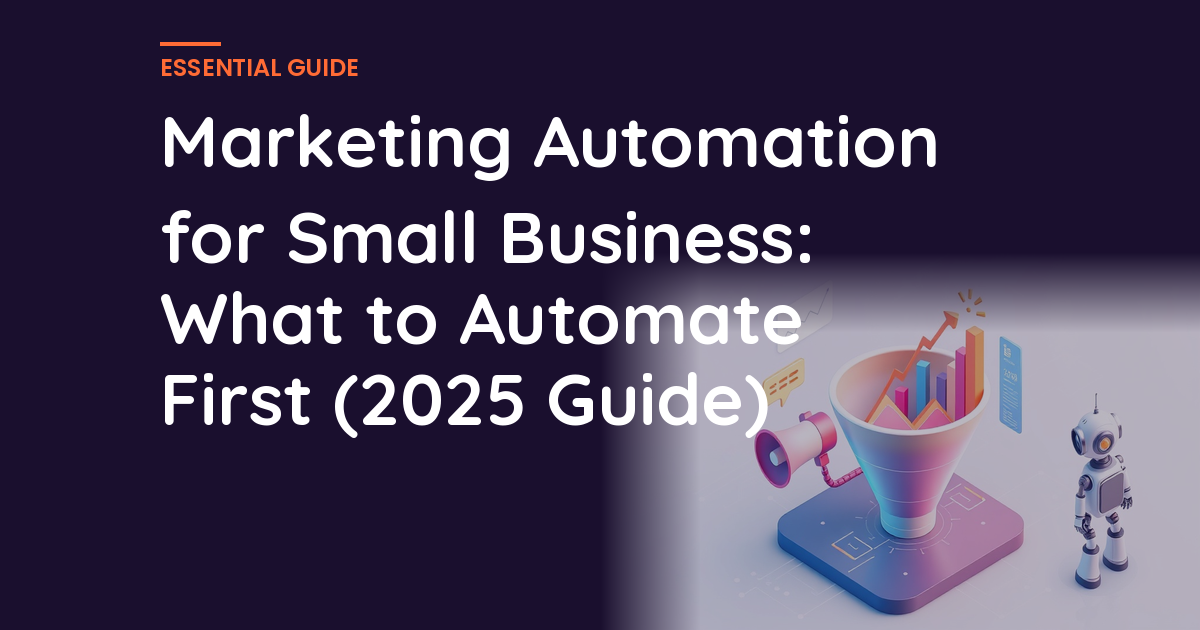
Marketing Automation for Small Business: What to Automate First (2025 Guide)
Why Most Small Businesses Get Marketing Automation Wrong
Getting marketing automation for small business right is one of the highest-leverage moves you can make. Picture this: You’re running a service business, juggling client calls, managing projects, and trying to find time for marketing. Someone tells you “just set up some automation” and suddenly you’re drowning in a maze of email sequences, triggers, and complicated workflows that were supposed to save you time but somehow made everything more complicated.
📋 Table of Contents
I see this constantly. Small business owners either avoid marketing automation entirely because it seems overwhelming, or they dive in headfirst and build a Rube Goldberg machine that breaks every other week and annoys their customers instead of helping them.
Here’s the reality: marketing automation isn’t rocket science, but it’s also not a magic bullet. Done right, it can recover 20-30% more revenue from leads you’re already generating, cut your manual marketing tasks by 60%, and make your business look bigger and more professional than it actually is. Done wrong, it’ll waste your time and piss off your customers.
After 12+ years helping businesses automate their marketing at DeskTeam360, I’ve learned that successful automation for small businesses isn’t about building complex enterprise-level systems. It’s about identifying the five or six repetitive tasks that eat your time or lose you money, then automating just those things really well.
Start Here: The Five Automations That Actually Move the Needle
Forget everything you’ve read about 47-email nurture sequences with dynamic personalization and behavioral triggers. That stuff exists, but it’s not where you start. These five automations are simple, they work for virtually every business, and you can set them up in a weekend.
Welcome Email Sequence (The Big One)
When someone joins your email list or becomes a lead, you have exactly one shot at making a first impression. Your welcome email gets 50-70% open rates, which is 2-3x higher than anything you’ll send later. If you’re not capitalizing on that moment, you’re leaving money on the table.
A simple five-email sequence delivered over two weeks consistently outperforms any other marketing tactic I’ve seen for small businesses. Email one arrives immediately with whatever you promised. Email two tells your story. Email three shares your most helpful resource. Email four includes social proof and testimonials. Email five makes a clear offer.
The key is keeping each email valuable on its own. If someone only opens the third email, it should still make sense and provide value. Don’t write a soap opera where you need to follow every episode to understand what’s happening.
Abandoned Cart and Form Recovery
Seventy percent of people who start a purchase or quote request abandon it before finishing. For service businesses, that’s often someone who filled out half your contact form and got distracted. A simple reminder email sent 24 hours later recovers 10-15% of those abandoned actions.
The follow-up doesn’t need to be complicated. “Hey, looks like you were interested in our services but didn’t finish submitting your information. Here’s the link to complete your request, and here’s my direct email if you have questions.” That’s it.
Appointment Reminders That Actually Work
No-show rates for service businesses average 20-30%. That’s real money walking away because people forgot about their appointment or double-booked themselves. Automated reminders via email 24 hours before and SMS one hour before cut no-shows by 40-60%.
But here’s what most people miss: the post-appointment follow-up is just as valuable as the reminder. A simple “thanks for meeting with us, here’s what we discussed and next steps” email sent automatically after every consultation keeps momentum going and looks professional.
Review Requests on Autopilot
Most businesses never ask for reviews because it feels awkward or they forget in the rush to finish projects and move on to the next one. Automation solves both problems. Seven days after project completion, an email goes out asking for a Google review with a direct link to your Business Profile.
Businesses that systematically request reviews get 3-5x more reviews than those that rely on customers to remember on their own.
The timing matters. Too soon and the customer hasn’t had time to see results from your work. Too late and they’ve forgotten about you. Seven to ten days is the sweet spot for most service businesses.
Lead Scoring for Hot Prospect Alerts
Not all leads are created equal. Someone who opened your last five emails, visited your pricing page twice, and downloaded your case study is ready for a phone call. Someone who subscribed six months ago and hasn’t opened an email since is not.
Lead scoring assigns points based on behavior: email opens, link clicks, page visits, form submissions. When someone crosses your threshold, your CRM alerts your sales team. This helps you focus time on leads most likely to convert instead of treating every inquiry the same.
Free Tool
How Much Is Freelancer Management Really Costing You?
Most agency owners have never done this math. Plug in a few numbers and see your real cost in 2 minutes.
Calculate Your Hidden Costs →
The Tools That Actually Work for Small Business
I’ve set up automation on every major platform. Here’s my honest assessment based on actually using them with clients.
ActiveCampaign: The Sweet Spot
For most small businesses ready to get serious about email automation, ActiveCampaign hits the perfect balance of power and usability. The visual automation builder makes sense, email deliverability is consistently top-tier, and the CRM integration works without constant tweaking.
Pricing starts at $29/month for up to 1,000 contacts, which is reasonable for what you get. The learning curve is steeper than basic email tools like Mailchimp, but you’re not drowning in enterprise features you’ll never use.
GoHighLevel: The All-in-One Option
GHL’s strength is consolidation. Instead of paying for separate tools for CRM, email, SMS, booking, and funnels, you get everything in one dashboard for $97/month. The automation capabilities are solid, especially for service business workflows.
The downside is complexity. GoHighLevel can do almost anything, which means it can feel overwhelming when you just want to set up a simple welcome sequence. It’s like buying a Swiss Army knife when you need a screwdriver.
Pro tip: Start with one platform and master it before adding others. The businesses that succeed with automation use three tools really well, not fifteen tools poorly.
HubSpot: When You’re Ready to Scale
HubSpot’s free CRM is genuinely useful and their entry-level Marketing Hub is powerful enough for most small businesses. But once you need the advanced features, you’re looking at $800+/month. It’s a platform you grow into, not start with.
The reporting and analytics are best-in-class, which matters when you’re trying to prove ROI to yourself or investors. But for a two-person service business, it’s probably overkill.
Mailchimp: The Gateway Drug
Mailchimp is fine for basic email marketing and simple automations. If you’re just starting out and need a welcome sequence plus monthly newsletters, it’ll do the job. But you’ll outgrow it quickly once you want proper lead scoring, advanced segmentation, or CRM integration.
Think of Mailchimp as training wheels. Great for learning the basics, but eventually you’ll need something more substantial.
How to Build Your First Automation Without Losing Your Mind
Let’s walk through setting up a practical lead nurture workflow for a service business. This isn’t theory, it’s the exact process I use with clients.
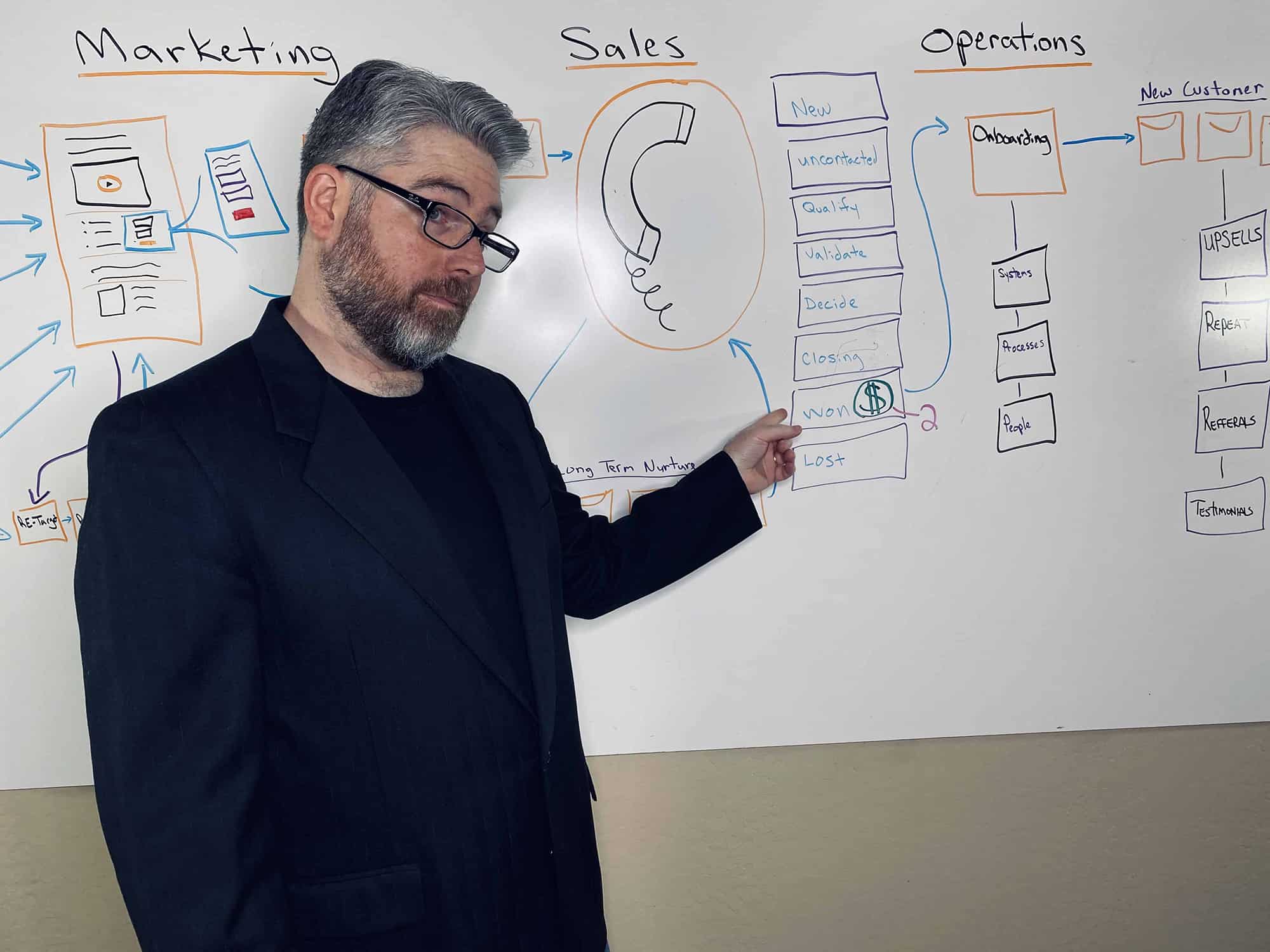
Start with the trigger: someone fills out your contact form. From there, you’re building a simple sequence that acknowledges their request, provides value, and guides them toward a conversion.
The immediate confirmation email thanks them for reaching out and sets expectations about response time. It also adds them to your CRM and alerts your sales team. Don’t make people wonder if their form submission worked.
Three days later, if they haven’t booked a call yet, they get an educational email with a relevant case study or blog post. Seven days later, another valuable resource. Fourteen days later, a “checking in” email with a clear call to book a consultation.
The key is providing value at every step. Each email should be useful even if someone never buys from you. If your automation feels like a sales pitch disguised as a newsletter, you’re doing it wrong.
Before going live, submit a test form entry and watch the entire workflow fire. Check that every email sends at the right time, every notification reaches the right person, and every CRM update happens correctly. Most businesses launch automations without testing and wonder why their conversion rates suck.
The Five Mistakes That Kill Marketing Automation
I’ve watched companies blow automation implementations in predictable ways. Here’s how to avoid each one.
First, automating bad processes. If your manual follow-up process is terrible, automating it just means you’re sending terrible follow-ups faster. Fix the process first, then automate it. Automation amplifies what you’re already doing, good or bad.
Second, over-automating communication. When a high-value prospect replies to your automated email with a specific question, a human needs to respond personally. The best automation creates space for genuine personal attention when it matters most.
Third, the “set and forget” mentality. Markets change, messaging gets stale, and what worked six months ago might not work today. Review your automations quarterly. Update copy, refresh offers, and adjust timing based on performance data. Our guide on measuring marketing ROI covers tracking what actually matters.
Fourth, ignoring data hygiene. Your automation is only as good as the data it runs on. If your CRM is full of duplicate contacts and stale email addresses, your automations will produce garbage results. Clean your data regularly or hire someone to do it for you.
Watch out: Sending the same automated sequence to every lead regardless of how they found you or what they’re interested in. A first-time website visitor needs different messaging than someone who’s been on your list for six months.
Related reading: Best Outsourced Marketing Services for Small Business [2026 Guide].
For industry research and benchmarks, check out Harvard Business Review on AI.
Fifth, not segmenting your audience. Someone who downloaded your pricing guide is in a different mental state than someone who signed up for your newsletter. Your automation should reflect that difference.
The Real ROI Numbers
Let me give you some actual numbers from businesses I’ve worked with, because this is where the business case gets compelling.
Welcome email sequences typically increase new lead conversion by 20-30% within the first month. For a business generating 50 leads per month with a 10% close rate, that’s 2-4 additional customers just from better follow-up.
Appointment reminders cut no-shows by 40-60%. If you’re a consultant charging $200 per appointment and you typically have five no-shows per month, automated reminders recover $400-600 monthly. That pays for your automation platform and then some.
Review request automation leads to 3-5x more Google reviews within six months. More reviews mean better local SEO rankings and higher conversion rates from organic traffic. The compound effect adds up quickly.
Lead scoring helps sales teams focus on qualified prospects instead of chasing every inquiry equally. Most businesses report 30-40% reduction in time spent on unqualified leads, which means more time for revenue-generating activities.

When to DIY vs When to Get Help
If you’re comfortable with technology and your needs are simple, you can set up basic automation yourself in a weekend. Welcome sequences, appointment reminders, and review requests are straightforward on any modern platform.
But if you need complex conditional logic, multiple platform integrations, or you’re migrating from one system to another, hire someone. The cost of getting automation wrong, broken workflows, data loss, missed leads, is always more expensive than professional setup.
At DeskTeam360, automation setup is one of our most popular services because it’s one of those projects worth doing right the first time. We handle the technical setup while you focus on running your business. For businesses considering broader marketing task outsourcing, automation is usually the logical starting point.
Your Next Steps
Marketing automation for small businesses isn’t about building enterprise-level complexity. It’s about identifying repetitive tasks that waste your time or lose you money, then systematically automating them with simple, reliable workflows.
Start with a welcome sequence for new leads. Add appointment reminders if you do consultations. Build review requests into your project completion process. Layer on lead scoring when you’re comfortable with the basics. Each automation compounds with the others to create a system that works while you sleep.
The businesses that succeed with automation master one thing at a time instead of trying to automate everything on day one. Pick your biggest pain point, automate it well, then move to the next one. Six months from now, you’ll wonder how you ever managed without it.
If you’re ready to set up marketing automation but don’t want to spend weeks learning platforms and building workflows, we can handle the entire setup for you. Our team specializes in CRM and automation systems that actually work for small business owners who need results, not complexity.
Free 5-Minute Video
See How DeskTeam360 Works in Under 5 Minutes
Watch the short video and see exactly how we handle design, development, and marketing implementation — so you don't have to.
Watch the Video →