


How to Outsource Marketing Tasks Without Getting Burned (From 12 Years and $1M in Lessons)
When you outsource marketing tasks, you’re making a strategic move. I’m going to tell you something I’ve never put in a blog post before.
📋 Table of Contents
About six years into running my company, I was sitting in my truck in a Costco parking lot, staring at my phone. I had 43 unread messages from freelancers. Two of them had ghosted on a client project that was due the next day. One of them had delivered work so bad I would’ve been embarrassed to put my name on it. And I had a new client onboarding call in 20 minutes that I wasn’t even close to ready for.
I remember thinking: I built this business so I wouldn’t have a boss. But now I have 30 of them, and they’re all freelancers who don’t show up.
That was the moment I realized I wasn’t running a business. I was babysitting. And the worst part? I was the bottleneck in my own company because I couldn’t let go of the marketing work that was eating me alive.
I’ve spent 12 years and over $1 million managing 200+ freelancers. I’ve made every outsourcing mistake you can make, and a few you probably can’t even imagine. That’s why I want to share exactly what I learned about outsourcing marketing the right way. So you don’t have to sit in a parking lot questioning your life choices.
Should You Even Outsource Your Marketing?
I get it. The idea of handing your marketing to someone else feels terrifying. It’s your brand. Your voice. Your reputation. Why would you trust that to a stranger?
Here’s the thing, you’re probably already outsourcing and don’t realize it. Using Canva templates? That’s outsourcing design to an algorithm. Paying for a social media scheduler? Outsourcing time management to software. Bought a WordPress theme? Outsourced web design.
The question isn’t should you outsource marketing tasks. The question is whether you’re doing it strategically or by accident.
Let me give you the honest gut-check. If any of these sound like you, it’s time.
You’re working in your marketing instead of on your business. You spend 3 hours making a social media graphic that a designer would finish in 20 minutes. I used to do this. I’d convince myself I was “saving money” while ignoring the $200/hour client work sitting in my inbox.
Your marketing is inconsistent. You post on Instagram for two weeks, get busy, disappear for a month, then feel guilty and do a burst of content that nobody sees. Sound familiar?
The real risk isn’t outsourcing. It’s being the person who tries to do everything and does nothing well. I’ve been that person. It almost broke me.
The 5 Marketing Tasks You Should Outsource First
When I first started to outsource marketing tasks, I made the mistake of trying to offload everything at once. Total disaster. It was like trying to train five new employees on day one while also doing all the work yourself.
Start with these five. They give you the most time back with the least risk.
Graphic Design
This is the easiest win. Social media graphics, ad creatives, presentation decks, email headers, this stuff eats hours and it doesn’t require your brain. It requires a designer’s brain.
I used to spend entire Sundays batch-creating social graphics. They looked okay. Not great. Just okay. The first time I handed this off to a real designer, the quality jumped and I got my weekends back. That’s not a trade-off. That’s a no-brainer.
A flat-rate team like our design service means you’re not paying per graphic or sweating every revision. You just send requests and get work back. It’s that simple.
Video Editing
You should be on camera. You should NOT be editing the footage. I can’t stress this enough.
Shooting a 5-minute video takes 10 minutes. Editing it, cutting, adding captions, transitions, music, thumbnails, takes 2-4 hours. For every piece of video content. The math doesn’t work if you’re the one editing.
I used to spend entire Saturday mornings editing talking-head videos in Premiere Pro. And I was slow. Painfully slow. A professional editor does in 45 minutes what took me half a day. Once I let go of that, I started making three times more content in half the time.
Record yourself talking. Send the raw file. Get back a polished video. This one change alone can free up 8-10 hours a week if you’re doing regular video content.
Website Updates and Landing Pages
How many times have you thought “I need to update that landing page” and then… didn’t? For weeks? I’ve talked to agency owners who had broken contact forms for months because they “didn’t have time” to fix them. That’s not a time problem. That’s a delegation problem.
Website tweaks, new landing pages, speed optimization, mobile fixes, this is technical work that slows you down and speeds up someone who does it every day. You submit a request, our dev team knocks it out, you review. Done.
Email Marketing Setup and Automation
Writing the emails? That should probably be you (or at least have your voice in it). But building the automations, designing the templates, setting up the sequences, segmenting your list, fixing deliverability issues? That’s technical work.
I wasted two full weeks once trying to set up a welcome sequence in ActiveCampaign. Two weeks. A marketing automation specialist could’ve done it in a day. I learned that lesson the expensive way, and by “expensive” I mean all the leads that leaked out of my funnel while I was watching YouTube tutorials.
Pro tip: Keep the strategy and your voice, but hand off the production and posting. You’ll actually be consistent for the first time, which matters more than being perfect. Nobody remembers the post that was “perfect.” They remember the brand that showed up every single day.
Social Media Content and Scheduling
Creating content, writing captions, scheduling posts across platforms, responding to comments. This is the hamster wheel that never stops. And when you’re the one running on it, you can’t do anything else.
Understanding how to measure marketing ROI becomes much easier when you’re not drowning in the day-to-day execution work. You can actually step back and see what’s driving results.

Free 5-Minute Video
See How DeskTeam360 Works in Under 5 Minutes
Watch the short video and see exactly how we handle design, development, and marketing implementation — so you don't have to.
Watch the Video →
What This Really Costs (And What It Saves You)
I’m not going to sugarcoat this. Outsourcing costs money. But let me show you the math that changed how I think about it.
Let’s say you’re an agency owner or consultant billing $150/hour for your actual expertise. Every hour you spend on marketing tasks you could outsource, you’re losing $150 in potential revenue. Not theoretical dollars, real ones.
For a deeper dive, see our guide on how to outsource event marketing materials: complete guide.
Here’s what outsourcing typically costs. Freelancer route: you’ll pay $50-150/hour depending on the skill. But here’s the hidden cost I never accounted for, management time. For every hour of freelancer work, I spent 15-30 minutes managing, reviewing, giving feedback, chasing deadlines. Over 200+ freelancers, that adds up to a second full-time job.
Agency route: retainers of $3,000-10,000/month. Good quality, but you’re locked into one specialty. Need design AND development AND video? That’s three agencies and three invoices.
Done-for-you team (the model we built): One flat monthly rate that covers design, development, video editing, and marketing support. We built DeskTeam360 this way because I lived the frustration of juggling 15 different freelancers. After serving 400+ clients and processing over $2.5 million through the platform, with zero chargebacks, I can tell you this model works because it removes the chaos.
According to the Bureau of Labor Statistics, the median hourly wage for a marketing manager is over $70/hour before benefits. That’s $140,000+ per year for one person with one set of skills.
But here’s what the spreadsheet doesn’t show: the mental space you get back. When I stopped trying to manage a small army of freelancers, I started thinking about growth again. I had ideas. I had energy. I wasn’t just surviving my inbox, I was actually running my company.
That’s the ROI nobody talks about. And it’s worth more than anything on a spreadsheet.
The 3 Mistakes That Waste Your Money
I made all of these. Some of them more than once. Learn from my pain.
Hiring for Price Instead of Reliability
Early on, I was addicted to finding the cheapest option. Five-dollar logos. Twenty-dollar blog posts. And I got exactly what I paid for, garbage I had to redo myself or pay someone else to fix.
One time, I hired a developer off a discount platform to build a client’s landing page. He delivered it three days late, it didn’t work on mobile, and when I asked for revisions he disappeared. I ended up rebuilding the whole thing myself at 2am the night before the deadline.
Watch out: The cheapest option almost always costs more in the end. Not just in money, in time, stress, and damage to your client relationships. When you outsource marketing tasks, pay for reliability. That’s the asset you’re actually buying.
Outsourcing Without Systems
You can’t hand someone a vague idea and expect great work. I tried this for years. “Hey, make me a social media graphic.” No brand guidelines. No examples. No specifications. And then I’d get frustrated when the work didn’t match what was in my head.
Before you outsource anything, you need three things: a clear brief template, brand guidelines (even basic ones), and examples of work you like. That’s it. You don’t need a 50-page operations manual. You need enough structure that the person doing the work isn’t guessing.
Learning how to scale without hiring only works when you’ve built the rails for work to run on. The same principle applies whether you’re building an internal team or working with outsourced specialists.
Trying to Outsource Strategy Before Execution
I see this all the time. Someone hires a “marketing strategist” before they’ve even figured out what content resonates with their audience. They spend $5,000 on a strategy document that collects dust because they have nobody to execute it.
Flip the order. Start by outsourcing the execution, the design, the editing, the technical builds. Keep the strategy close to your chest while you learn what works. Once you know what’s working, then you can bring in strategic help to scale it.
For industry research and benchmarks, check out Clutch.co.
You wouldn’t hire an architect before you owned the land. Don’t hire a strategist before you have an execution team.
How to Get Started This Week
I know what you’re thinking. “This sounds great, but where do I actually start?” I’ve been there. The overwhelm of figuring out outsourcing can feel almost as bad as doing everything yourself.
So here’s your simple game plan. No 8-week launch plan. No complicated framework. Just do these things this week.
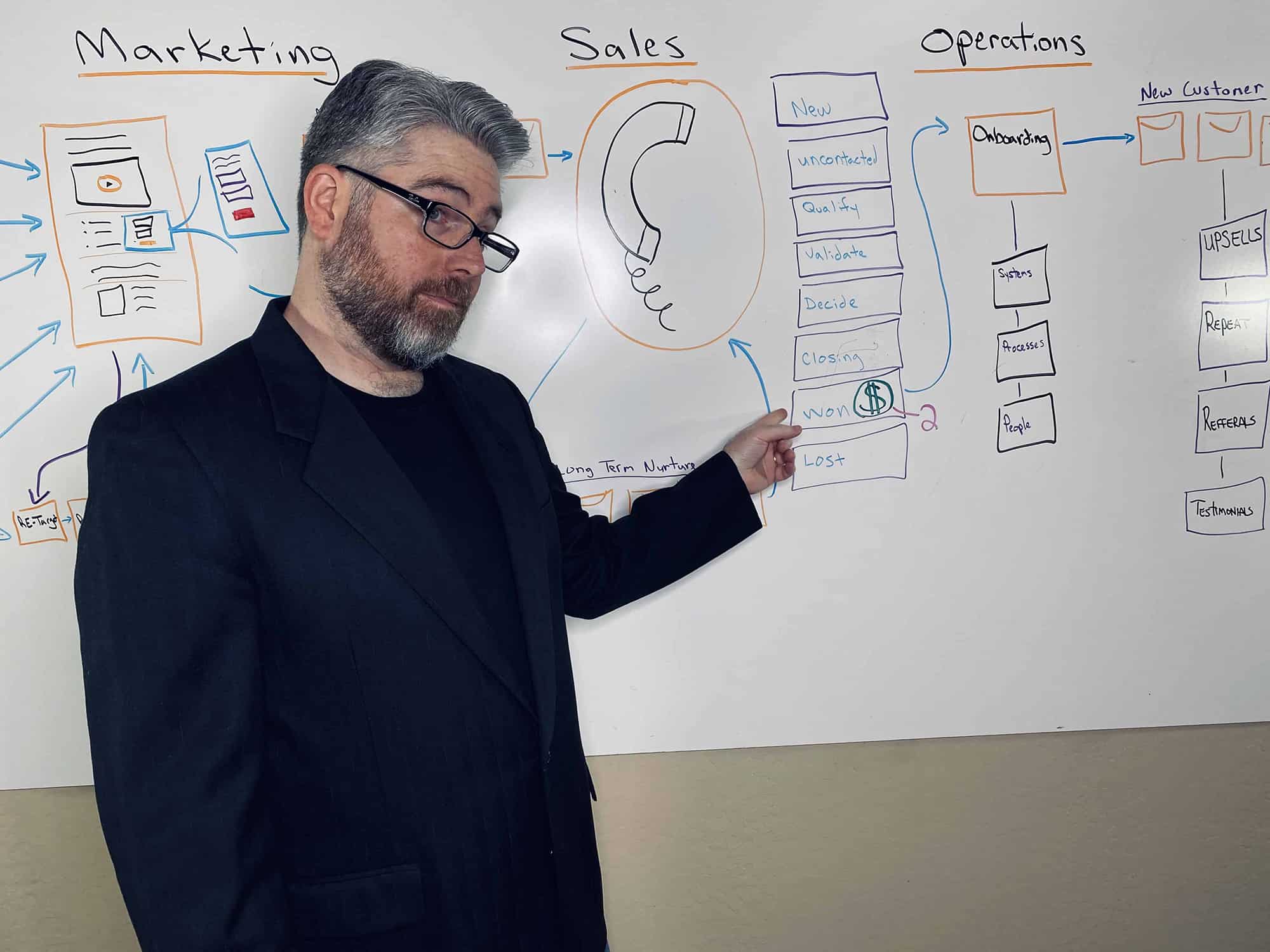
Day 1: Track your time. For one full workday, write down everything you do that isn’t your core expertise. Design work, website tweaks, posting on social, editing videos, formatting emails. You’ll probably be shocked at how many hours go to stuff that isn’t your actual job.
Day 2: Pick ONE task to offload. Just one. The one that eats the most time and frustrates you the most. For most people, it’s graphic design or website updates. Don’t try to outsource your entire marketing operation in week one.
Day 3: Set up your brief. Write a simple template: what you need, when you need it, examples of what you like, and your brand colors/fonts. This takes 30 minutes and saves hours of back-and-forth on every future project.
Day 4: Send your first request. Whether that’s to a freelancer, an agency, or reaching out to our team, just send the first one. The first request is always the hardest. After that, it becomes muscle memory.
Day 5: Review and adjust. Look at what came back. Give feedback. Refine your brief. This is where the system starts to click.
That’s it. Five days. You haven’t restructured your company or signed a year-long contract. You’ve just taken one thing off your plate and proven to yourself that it works.
According to HubSpot’s State of Marketing report, the top-performing marketing teams use an average of 5+ outsourced specialists. You don’t need to get there overnight. You just need to start.
Most of our clients started with a single task, they’d outsource marketing tasks like a marketing implementation they’d been putting off for months. One request turned into two. Two turned into ten. Before they knew it, they had a whole system running without them touching the grunt work. That’s the goal.
Build Your Outsourcing System Today
Letting go is hard. I spent years being the guy who touched every deliverable, micromanaged every freelancer, and stayed up until midnight fixing work that should’ve been done right the first time.
Building DeskTeam360 wasn’t just a business decision. It came from being exhausted by the old way. I wanted to build the thing I wished existed when I was drowning, a real team with real people in a real office, managed by US-based account managers, doing the work reliably at a flat rate that doesn’t surprise you.
If you’re sitting where I was, overwhelmed, doing too much, growing too slowly because you can’t let go of the tasks that don’t need you, this is your sign. You don’t need to outsource everything. You just need to outsource the right things, to the right people, with the right systems. And you can start this week.
You built your business to have freedom. It’s time to actually take it.
Free Tool
How Much Is Freelancer Management Really Costing You?
Most agency owners have never done this math. Plug in a few numbers and see your real cost in 2 minutes.
Calculate Your Hidden Costs →