


Digital Marketing for Photographers: Book More Clients in 2025
Digital marketing for photographers requires a focused strategy that actually drives results.
📋 Table of Contents
Why Amazing Photographers Go Bankrupt While Mediocre Ones Get Rich
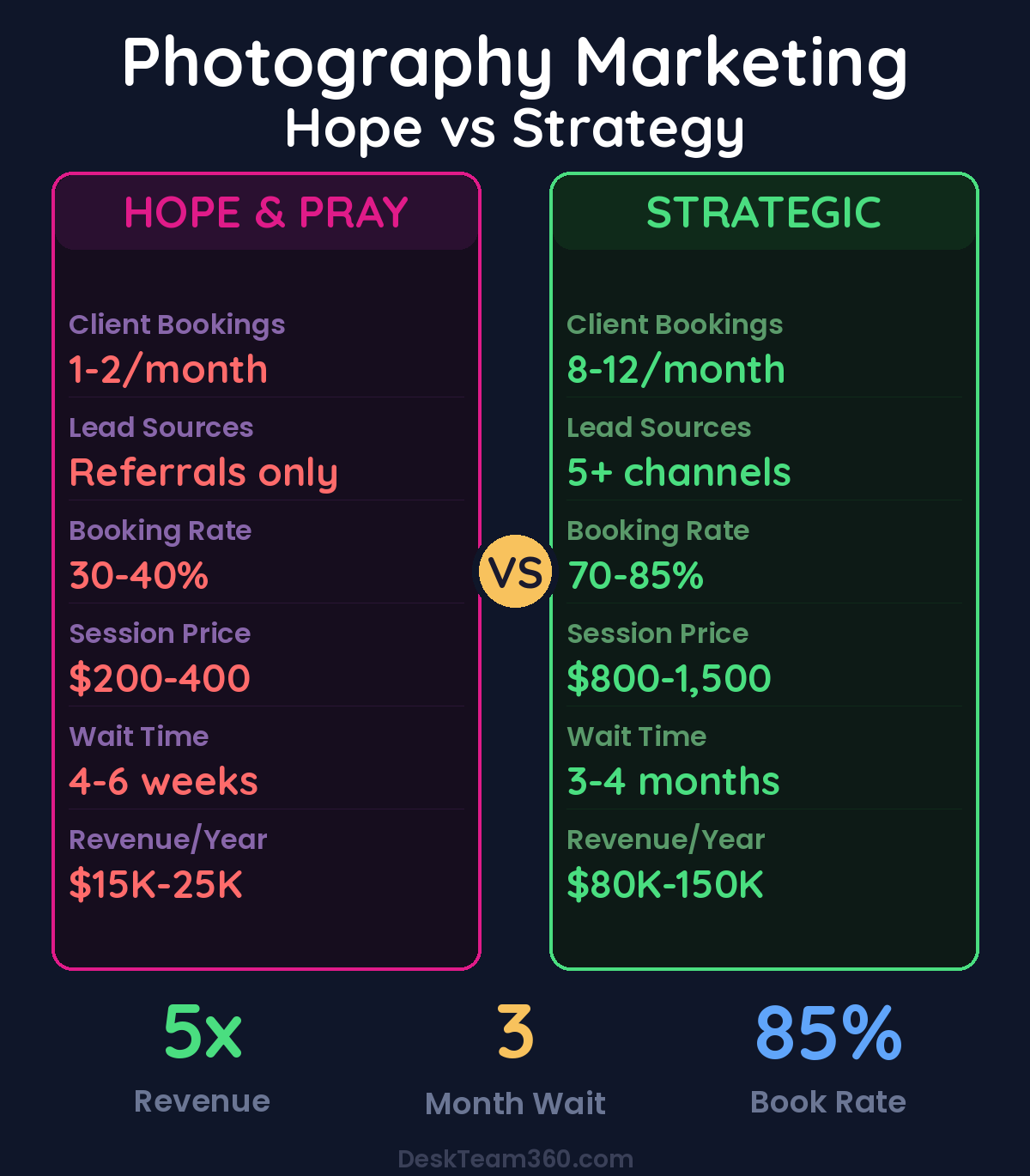
Here’s the brutal truth that no one talks about in photography circles: your skill with a camera has almost zero correlation with your bank account balance. I’ve watched insanely talented photographers struggle to book a single client while someone with basic technical skills fills their calendar three months out.
The difference? They understand that being a photographer is actually two jobs. Taking pictures is one job. Running a business that attracts clients is the other job. Guess which one pays the bills?
After working with 400+ creative service businesses over 12 years, I’ve seen this pattern destroy too many photographers who thought their portfolio would speak for itself. Spoiler alert: portfolios don’t write checks. Clients do. And clients only hire photographers they can find.
If you’re tired of being the best-kept secret in your market, let’s fix that. Here’s exactly how to build a marketing system that keeps your calendar full and your rates high.
Your Website Isn’t a Portfolio, It’s a Sales Tool
Most photographers completely misunderstand what their website should do. They treat it like an art gallery when it should function like a sales machine. Every element should have one goal: convince visitors to book a session.
Your homepage needs to answer three questions immediately: what type of photography do you specialize in, who do you serve, and how do they book you? Everything else is secondary. I don’t care how artistic your abstract navigation menu is, if people can’t figure out how to contact you, it’s worthless.
Speed matters more than you think, especially for photography websites loaded with high-res images. A site that takes eight seconds to load loses 53% of visitors before they see a single photo. Compress your images for web display. A slightly softer image that loads instantly beats a pixel-perfect image that never gets seen.
Show pricing upfront or at least starting prices. “Contact for pricing” kills more leads than it generates. People want to know if you’re in their budget before they invest time filling out a contact form. You don’t have to list your entire pricing structure, but give them a ballpark. “Wedding collections starting at $3,500” eliminates tire-kickers and attracts serious clients.
Make booking stupid simple. One contact form, clearly labeled, that asks only essential questions. Name, email, phone, event date, and a brief description of what they’re looking for. That’s it. Every additional field reduces conversion rates. If you need more details, get them on a phone call after they’ve already expressed interest.
Your about page needs personality, not just credentials. People hire photographers they like and trust. Show your face, tell your story, and let your personality come through. Skip the corporate headshot and stiff bio. Use a photo that looks like you and write like you’re talking to a friend. The technical specs of your camera matter far less than whether clients want to spend their wedding day with you.
Free Tool
How Much Is Freelancer Management Really Costing You?
Most agency owners have never done this math. Plug in a few numbers and see your real cost in 2 minutes.
Calculate Your Hidden Costs →
Local SEO Is Your Best Friend
When someone in your city searches “wedding photographer” or “family portraits near me,” they’re actively looking to hire someone right now. That’s the highest-intent traffic you can get, and it’s completely free. Yet most photographers ignore local SEO entirely.
Your Google Business Profile is the first thing potential clients see when they search for photographers in your area. If you haven’t claimed and optimized it, you’re invisible to local searches. Set your primary category to your most profitable service, not just “photographer.” “Wedding photographer” and “portrait photographer” are more specific and rank better.
Upload new photos weekly. Google rewards active profiles with better visibility. Don’t just upload random images, either. Show the types of sessions you want to book more of. If you want more wedding clients, flood your profile with wedding photos. If corporate headshots pay your bills, showcase professional portraits.
Pro tip: Blog every single session you shoot. Each blog post becomes a new page targeting local keywords naturally. “Smith Family Fall Portraits at Papago Park” ranks for family photographers in Phoenix better than a generic services page ever will.
Reviews are everything in local search. Google uses review quantity and quality as major ranking factors. Send every client a direct link to leave a Google review. Make it part of your workflow, not an afterthought. Most clients are happy to leave a review if you make it easy. Send the link with their gallery delivery email.
Create location-specific pages for each area you serve. A page titled “Wedding Photography in Scottsdale” with local references, venue mentions, and portfolio images from that area outranks generic pages every time. Don’t just copy and paste the same content with different city names. Google isn’t stupid. Write unique content that mentions local venues, landmarks, and neighborhoods you actually know.
Target long-tail keywords that include your location. “Photographer” is impossible to rank for and too generic anyway. “Gilbert Arizona newborn photographer” has less competition and higher intent. Someone searching for that specific term is ready to book a session, not just browsing pretty pictures.
Instagram Strategy That Actually Books Clients
Instagram is the most important social platform for photographers, but most use it completely wrong. They post beautiful images and wonder why their phone isn’t ringing. Pretty pictures aren’t a strategy. They’re just the starting point.
Your Instagram grid is your visual elevator pitch. Every post should represent the type of work you want to be hired for. If you want more wedding clients, stop posting your random street photography experiments. Consistency beats creativity when it comes to attracting ideal clients. They need to instantly understand what you do and whether you’re right for them.
Behind-the-scenes content humanizes your brand and educates potential clients about your process. Show camera settings for specific lighting conditions, time-lapse videos of your editing process, or setup shots from recent sessions. This positions you as a professional who knows their craft while giving followers valuable insights they can’t get anywhere else.
Location hashtags are gold mines that most photographers ignore. #Photography has 1 billion posts where yours gets buried. #PhoenixWeddingPhotographer has 5,000 posts where potential clients actually see your work. Think local, not global.
Stories are where relationships happen. Use them to share real-time updates from shoots, behind-the-scenes moments, and personal content that lets people connect with you as a human being. The algorithm favors accounts with high story engagement, so consistent story posting improves your overall reach.
Reels dominate the algorithm right now, and they’re perfect for photographers. Transform session highlights into 15-30 second Reels set to trending audio. Show before-and-after editing reveals, quick posing tips, or day-in-the-life content. The investment in creating Reels pays off with dramatically better reach than static posts.
Engage authentically with your local photography community, venues, and vendors. Comment meaningfully on their posts, share their content when relevant, and build genuine relationships. The wedding industry especially runs on referrals between vendors. A florist who knows and likes you will recommend you to every bride who needs a photographer.
Email Marketing That Pays the Bills
Your email list is the most valuable marketing asset you own because you control it completely. Instagram could ban your account tomorrow. Your email list can’t disappear unless you stop paying attention to it.
Every website visitor should have the opportunity to join your list, even if they’re not ready to book yet. Offer something valuable in exchange for their email address. A planning guide for engagement sessions, posing tips for family photos, or a timeline for wedding day photography. Give them something they actually want, not just access to your newsletter.
Photographers who email their list regularly book 65% more repeat clients than those who rely solely on new client acquisition.
For a deeper dive, see our guide on how to create a portfolio website that wins clients.
Send monthly updates that feel personal, not promotional. Share recent sessions with a story behind each one, announce booking availability before posting it publicly, and include personal updates that help subscribers feel connected to you as a person. People hire photographers they like, and your email list is where that relationship develops.
Past client re-engagement emails are criminally underutilized by photographers. Reach out to wedding clients on their anniversary with a special offer on couple’s sessions. Contact family portrait clients when it’s been a year since their last session. Send mini-session announcements to your entire list before posting them publicly. Your existing clients are your best source of repeat business and referrals, but you have to stay in touch with them.
Automated email sequences can nurture leads while you’re shooting. Set up a welcome series for new subscribers that introduces your style, shares client testimonials, and explains your booking process. Create follow-up sequences for people who inquire but don’t book immediately. Many clients need time to make decisions, especially for big investments like wedding photography.
Mini-Sessions Are Marketing Gold
Mini-sessions solve multiple business problems at once. They’re lower-commitment for nervous first-time clients, they’re higher revenue per hour than full sessions when you batch them properly, and they’re incredible marketing tools that generate referrals and social content.
Seasonal mini-sessions create urgency and scarcity that drives bookings. Fall foliage sessions, holiday card sessions, spring wildflower sessions, and back-to-school sessions tap into natural demand cycles. Market them as limited-time opportunities with specific dates, times, and spot limits. Scarcity drives action better than open-ended availability.
Watch out: Don’t underprice mini-sessions just to fill spots. Price them as premium offerings that deliver exceptional value in a shorter timeframe. Cheap sessions attract bargain hunters who won’t become full-price clients later.
For industry benchmarks and research, see HubSpot Marketing Blog.
For a deeper dive, see our guide on digital marketing for home services: the complete playbook.
Use mini-sessions to test new markets or styles without fully committing. Want to try newborn photography but not sure if there’s demand in your area? Offer a limited number of mini newborn sessions and see how quickly they fill. It’s market research that pays you instead of costing you.
The follow-up after mini-sessions is where the real money gets made. Send gorgeous galleries that showcase your work at its best, ask for reviews and referrals, and include offers for full sessions at a discount. Many mini-session clients book full sessions within six months if you nurture the relationship properly.
Document everything about successful mini-sessions so you can repeat them. Which locations work best, what time of year generates the most demand, how far in advance to start marketing, and what pricing points maximize both bookings and profit. Turn successful mini-sessions into recurring revenue streams you can count on every year.
Paid Advertising That Actually Works
Google Ads are perfect for photographers because the search intent is crystal clear. Someone searching “wedding photographer Denver” is actively looking to hire someone right now. That’s the highest-quality traffic you can buy.
Start with a modest budget and focus on high-intent keywords. “Wedding photographer [your city]” and “[service type] photographer [location]” variations convert better than broad photography terms. Send ad traffic to dedicated landing pages designed specifically for that service, not your homepage. A page optimized for wedding photography inquiries will convert better than a general portfolio page.
Facebook and Instagram ads let you target with incredible precision. Wedding photographers can target recently engaged people in their service area. Facebook actually knows who got engaged recently based on relationship status changes and engagement ring shopping behavior. Family photographers can target parents with children in specific age ranges. Business headshot photographers can target entrepreneurs, executives, and corporate employees.
The creative matters more than the targeting for photography ads. Carousel ads showing 4-5 images from a single session perform better than single image ads. Video slideshows with before-and-after editing reveals grab attention in busy social feeds. Testimonial-based ads with client photos and review text build trust with potential customers who don’t know you yet.
Track everything ruthlessly. Know exactly how much each lead source costs and which ones convert to actual bookings. Some channels generate lots of inquiries that don’t book. Others generate fewer inquiries but higher-quality clients who spend more. Our guide on measuring marketing ROI shows you exactly what to track and how to optimize based on the data.
Vendor Relationships That Generate Referrals
For wedding photographers especially, vendor relationships are the secret to staying booked. Wedding planners, venues, florists, DJs, and other vendors recommend photographers to every single client they work with. Getting on their preferred vendor lists is like having multiple sales people working for you.
Build these relationships before you need them. Offer to second-shoot events for free to meet vendors and see how they work. Share photos of vendors on social media and tag them properly. Send gallery images to all vendors involved in every wedding you shoot. They need content for their own marketing as much as you do.
Attend local wedding industry events, vendor mixers, and styled shoots. These aren’t just networking opportunities, they’re relationship-building experiences where vendors get to know you personally. People refer business to vendors they know, like, and trust. You can’t build those relationships through social media alone.
Be genuinely helpful to other vendors without expecting immediate returns. Recommend planners to couples who don’t have one yet. Share lead information when someone contacts you about a date you’re already booked. Refer inquiries that aren’t a good fit to photographers whose style better matches what the client wants. What goes around comes around in the wedding industry.
Document every vendor relationship in a simple spreadsheet. Track who referred clients to you, which venues you’ve worked at, and which vendors you’ve collaborated with. Follow up periodically with vendors who haven’t sent referrals recently. Sometimes they’ve simply forgotten you’re available, not actively chosen someone else.
Measuring What Matters
Marketing without measurement is just expensive guessing. Track where every inquiry comes from by asking “How did you find me?” on contact forms and during initial consultations. Most photographers have no idea which marketing efforts actually generate bookings versus which ones just make them feel busy.
Calculate the true cost per booking for each marketing channel, not just cost per inquiry. Some sources generate lots of inquiries that don’t convert. Others generate fewer inquiries but higher booking rates. A source that costs $50 per inquiry but books 80% is better than one that costs $20 per inquiry but only books 20%.
Monitor booking rates by lead source over time. Referral clients typically book at higher rates and spend more than clients from paid ads or organic search. But you need paid channels to grow beyond your current referral network. Understanding these patterns helps you allocate marketing budget more effectively.
Track revenue per client by source as well. Wedding clients from vendor referrals often spend more on additional services than those from Google searches. Family portrait clients who find you through mini-sessions book full sessions at higher rates than cold traffic. These insights help you focus on the most profitable marketing channels for your business.
Our detailed guide on balancing SEO and paid advertising helps photographers understand how to build sustainable marketing systems that grow over time instead of requiring constant cash injections.
Build a Photography Business That Markets Itself
The photographers who consistently book ideal clients at premium rates aren’t necessarily the most talented behind the camera. They’re the ones who treat marketing as a core business function, not an afterthought. They understand that visibility drives profitability more than technical perfection.
Start with the foundation: optimize your Google Business Profile, create location-specific website content, and blog every session for SEO. Then layer in social media consistency, email marketing, and strategic mini-sessions. Add paid advertising and vendor networking as you grow. Each piece builds on the others to create a marketing system that generates bookings while you sleep.
The biggest mistake photographers make is waiting until their calendar is empty to start marketing. Successful photographers market consistently when they’re busy so they never experience the feast-or-famine cycle that destroys so many creative businesses.
Your camera captures moments. Your marketing creates clients. Master both, and you’ll never struggle to book another session.
If managing all the marketing components feels overwhelming while you’re also shooting, editing, and running a business, professional support makes the difference. Outsourcing social media graphics and understanding the investment in professional website design can free up significant time while maintaining professional quality across all your marketing channels.
Free 5-Minute Video
See How DeskTeam360 Works in Under 5 Minutes
Watch the short video and see exactly how we handle design, development, and marketing implementation — so you don't have to.
Watch the Video →