

Digital Marketing for Insurance Agents: The Complete Guide
Digital marketing for insurance agents requires a focused strategy that actually drives results.
📋 Table of Contents
Why Most Insurance Agents Are Getting Crushed Online
There’s a simple reason why 80% of insurance agents struggle with digital marketing: they’re trying to sell the most boring product on earth to people who actively avoid thinking about it.
I’ve worked with thousands of businesses over the past 12 years, and insurance agents face a brutal combination. You’re competing against every other agent in your market for the same keywords. You’re dealing with compliance requirements that would make a lawyer cringe. And you’re trying to generate excitement about a product that everyone needs but no one wants to buy.
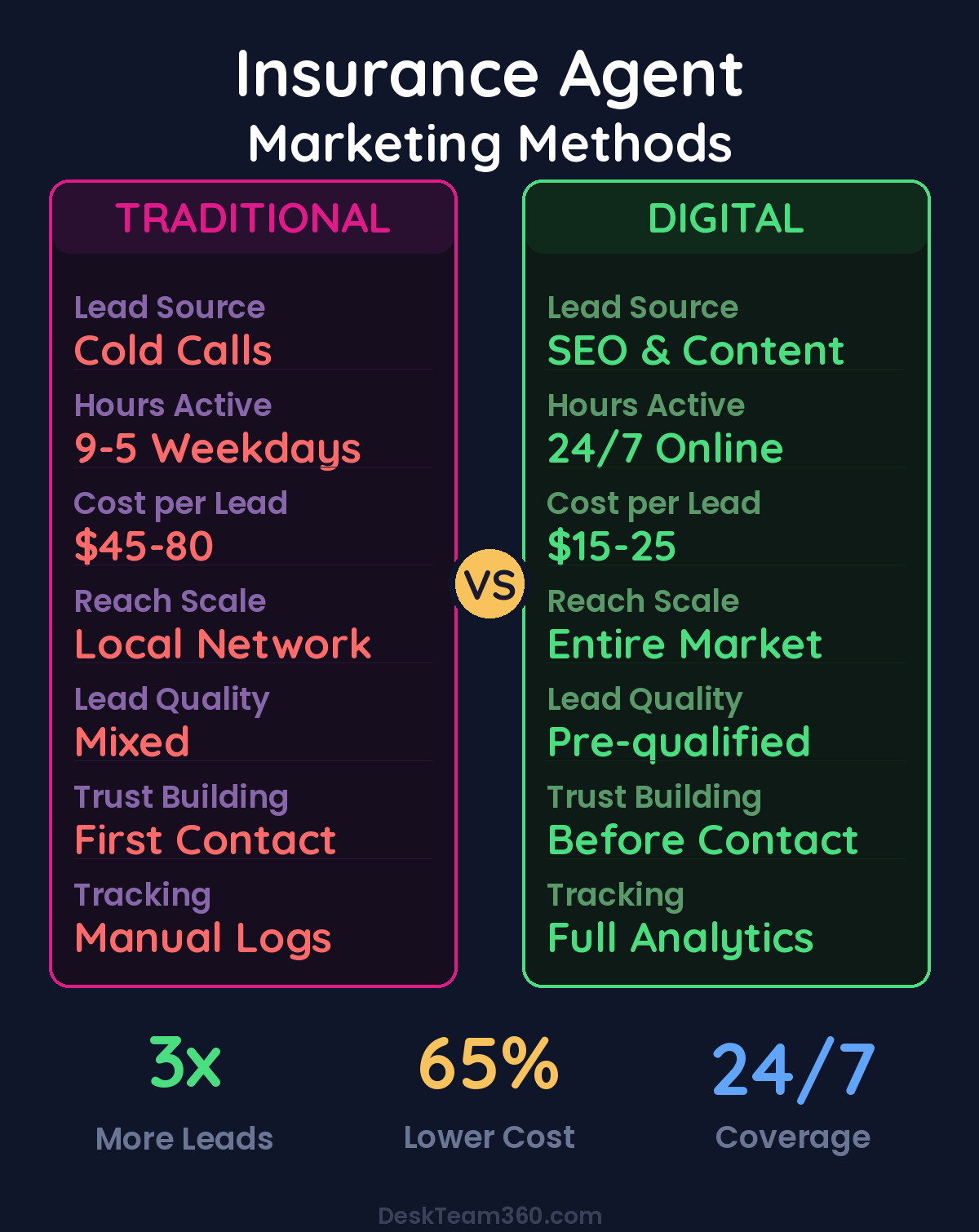
But here’s what I’ve noticed. The agents who crack the digital marketing code don’t just survive, they absolutely demolish their competition. While most agents are still cold calling from purchased lead lists and hoping for referrals, the smart ones are building marketing systems that deliver qualified prospects 24 hours a day.
This isn’t generic marketing advice. This is the specific playbook that works for selling insurance in 2026, complete with the compliance considerations and conversion tactics that matter in your industry.
How People Actually Shop for Insurance Today
Before you build any marketing system, you need to understand what actually triggers someone to shop for insurance and how they go about it.
Most insurance purchases start with a life event. Someone buys a new house, finances a car, starts a business, gets married, has a baby, or gets hit with a massive rate increase at renewal time. That trigger event creates urgency, and from that moment, they typically make a decision within one to two weeks.
Here’s how the process actually unfolds. First, they Google their basic question: “how much does homeowners insurance cost” or “best auto insurance rates.” They’ll read a few comparison articles, maybe ask friends for recommendations, and then visit 2-4 agent websites to get actual quotes. During this phase, they’re evaluating you based on your website, your Google reviews, how quickly you respond, and whether you seem like someone they can trust when something goes wrong.
This is why most insurance marketing fails. Agents optimize for the moment someone is ready to buy, but they ignore the earlier research phase when buying preferences actually get formed.
Free Template
The Ultimate Task Delegation Template
Stop guessing what to hand off. This template shows you exactly what to delegate, how to brief it, and how to QA the results.
Get the Free Template →
Build a Website That Actually Generates Leads
I’ve audited hundreds of insurance agent websites, and 90% of them are basically digital business cards. They list the types of insurance you sell, maybe have a stock photo of a happy family under an umbrella, and an “About Us” page with your license number. That’s not a website that generates business, that’s a brochure that happens to be online.
A real lead-generating insurance website needs dedicated pages for every insurance type you sell. Auto insurance gets its own page. Home insurance gets its own page. Business insurance, life insurance, umbrella coverage, each one needs to be a separate page targeting different keywords and different buyer intent.
Every single page needs a quote request form, not just buried on a generic contact page. When someone lands on your auto insurance page, they should see a form to request an auto insurance quote right there. Don’t make them hunt for it.
Your phone number needs to be clickable on mobile because 70% of your traffic is on phones. One tap should dial your office directly. If you’re not set up for click-to-call, you’re losing leads every single day.
Pro tip: Add trust signals throughout your site. Display your Google review rating in the header, show carrier logos, professional association memberships, and how many years you’ve been in business. People buy insurance from agents they trust, and trust starts with your website.
Your site also needs to load fast. If it takes more than three seconds to load, prospects are bouncing before they even see what you offer. Run a speed test and fix any performance issues before you do anything else with marketing.
For comprehensive guidance on building a high-converting website, our website redesign checklist walks through every element that drives more leads.
Own Your Local Market With Strategic SEO
For insurance agents, local SEO delivers the highest return on investment of any digital marketing tactic. When someone searches “insurance agent near me” or “auto insurance in [your city],” you need to dominate those results.
Your Google Business Profile is often the first impression prospects get of your agency, so optimize it aggressively. Set your primary category to “Insurance Agency” and add secondary categories for each specialty like “Life Insurance Agency” or “Auto Insurance Agency.” Fill out every single field completely: hours, services, description, products, and attributes.
Most agents update their Google profile once and forget about it. That’s a mistake. Add new photos every week. Office photos, team photos, community involvement, client events. Profiles that get regular updates receive significantly more visibility in local search results.
Post updates weekly about insurance tips, seasonal reminders, and agency news. Google treats these posts like mini-content pieces and they help your profile stay active in the algorithm.
Reviews are the single biggest factor in local search rankings for insurance agents. Your competitors with 100+ reviews are capturing leads that should be going to you. Build a systematic process to earn 5+ reviews every month.
Here’s how to build a review generation system that actually works. After every policy binding, send a personal thank-you email that includes a direct link to leave a Google review. After any positive claims experience, ask for a review while the good experience is fresh in their mind. During annual policy reviews, ask satisfied long-term clients to share their experience online. Make it easy by sending the direct Google review link, not just saying “please leave us a review.”
Train your entire team to ask for reviews when clients express satisfaction in person. “I’m so glad we could help you through that claim. Would you mind taking two minutes to share that experience in a Google review?” Most people are happy to help when you ask directly.
Content Marketing That Builds Trust Before the Sale
Insurance is fundamentally a trust-based purchase. People don’t choose the cheapest option, they choose the agent they trust to take care of them when something goes wrong. Content marketing is how you build that trust before the first phone conversation happens.
Write about what your prospects are actually searching for. “How much does homeowners insurance cost in [your state]?” is getting searched hundreds of times every month in your market. So is “What does business insurance cover?” and “How to lower my auto insurance rates.” Each of these questions represents someone actively shopping for insurance.
Your content should genuinely answer the question completely, not just provide a teaser to get them to call you. People can tell when you’re holding back information to force a phone call, and it destroys trust. Give away your best insights in your content. The prospects who value that expertise are the ones who will become great clients.
Watch out: Don’t write generic insurance content that could apply to any agent in any state. Include specific information about your state’s requirements, local risk factors, and how your local market works. Generic content gets ignored.
For more on this, check out our guide on marketing implementation for online service providers: a practical guide.
Insurance has natural content cycles throughout the year. January is perfect for “new year insurance review” content. Spring is ideal for home maintenance tips tied to homeowners coverage. Summer driving season creates opportunities for auto safety content. Back-to-school season means teen driver coverage. Use these cycles to plan content that hits when people are naturally thinking about those topics.
For help planning and organizing your content strategy, our content calendar guide covers how to map out what to publish and when.
Lead Generation Funnels That Convert Insurance Prospects
A successful insurance lead generation funnel follows a simple pattern: attract traffic, capture contact information, nurture the relationship, and convert to clients.
The quote funnel is your bread and butter. Drive traffic to a dedicated landing page through Google Ads targeting “insurance quotes [your city]” or from organic search through your blog content. The landing page should be clean and focused with one goal: getting quote request information. Ask for name, email, phone number, insurance type, and current coverage status. Nothing else.
Your confirmation page should set clear expectations: “Thanks! We’ll get back to you within 2 hours with your personalized quote.” Then actually deliver on that promise. Call within 1-2 hours, and follow up with a sequence of helpful emails over the next week even if you can’t reach them initially.
For prospects who aren’t ready to request quotes yet, build an educational funnel. Create valuable content offers like “The First-Time Homebuyer’s Insurance Checklist” or “10 Ways to Lower Your Business Insurance Costs.” Gate this content behind an email form, then nurture those leads with additional valuable content over 3-4 weeks before presenting your conversion offer.
Our landing page design guide covers the specific elements that turn visitors into leads for professional service businesses.
Make Google Ads Profitable in a High-Cost Industry
Google Ads can be the fastest way to generate insurance leads, but it’s also one of the most expensive industries for pay-per-click advertising. Insurance keywords can cost $20-80 per click, which means you need a strategic approach to make the economics work.
Focus on long-tail keywords that have lower competition and higher intent. “Auto insurance for small business fleet in [your city]” costs significantly less per click than “auto insurance” and converts much better because it matches specific buyer intent.
Use location targeting aggressively to only show ads within your actual service area. Don’t waste money on clicks from people in other states who can’t become clients. Create separate campaigns for each insurance type so you can optimize bids and ad copy for each specific audience.
Build dedicated landing pages that match each ad group’s search intent. Someone searching for business insurance shouldn’t land on a generic page about all your services. They should land on a page specifically about business insurance with a business insurance quote form.
Agents using Google Local Services Ads see 40% lower cost per lead compared to traditional Google Ads.
For industry research and benchmarks, check out Think with Google.
Google Local Services Ads deserve special attention. These “Google Guaranteed” ads appear at the very top of search results, above traditional paid ads. You pay per lead rather than per click, which means you only pay when someone actually calls or messages you from the ad. Google verification adds instant credibility through background checks and license verification. If LSAs are available in your market, they should be part of your strategy.
Social Media Strategy That Actually Drives Business
Social media for insurance isn’t about going viral or building a massive following. It’s about staying visible to your existing network and building trust with prospects who find you through other channels.
On Facebook, share educational content consistently. Insurance tips, seasonal reminders, and relevant local news keep you in front of your network. Celebrate client milestones when appropriate: “Congratulations to the Johnson family on their new home!” Post about your community involvement. Sponsor a little league team? Post about it. People want to work with agents who are invested in their community.
Use Facebook’s retargeting capabilities to stay in front of website visitors who didn’t convert. Someone who visited your auto insurance page but didn’t request a quote can see targeted ads for the next 30 days reminding them to get their quote.
LinkedIn is hugely underutilized by insurance agents, which makes it an opportunity. Connect with local business owners, HR directors, and other professionals who make insurance decisions. Share thought leadership content about business insurance, risk management, and employee benefits. Comment thoughtfully on your connections’ posts to stay visible in their feeds.
YouTube represents a massive long-term opportunity. Insurance questions get searched on YouTube constantly, and well-optimized videos can drive leads for years. Create short educational videos (3-5 minutes) answering common insurance questions. “How much does business insurance cost for a restaurant?” or “What’s the difference between term and whole life insurance?” These videos establish your expertise and capture search traffic.
Email Marketing for Client Retention and Growth
Acquiring a new insurance client costs 5-7 times more than retaining an existing one, which makes email marketing your most important retention tool.
Your monthly newsletter should include one practical insurance tip or seasonal reminder, a brief market update about rate trends or new coverage options, a client spotlight or community involvement highlight, and a direct call to action like “Due for your annual policy review? Reply to this email or give us a call.”
Set up automated emails that trigger based on policy lifecycle events. New clients should get a welcome sequence explaining what to expect, how to file a claim, and your contact information. Send renewal reminders 60 days before expiration with an invitation to review coverage together. Annual review invitations help you stay proactive about cross-selling and upselling existing clients.
Personal touch emails on birthdays or policy anniversaries keep relationships warm between renewal periods. Cross-sell emails based on coverage gaps: “I noticed you have auto insurance with us but haven’t bundled your home insurance. Bundling typically saves 15-25%.”
For help with professional email template design that works across all email clients, our email marketing outsourcing guide covers the complete process.
Navigate Insurance Marketing Compliance
Insurance marketing operates under regulations that other industries don’t face. Every state’s department of insurance has specific rules about advertising claims, testimonials, and disclaimers. Review your state’s guidelines before launching any marketing campaign.
Most insurance carriers have their own advertising guidelines about how you can represent their products and rates. Get pre-approval when required rather than risk compliance issues later. All marketing emails need unsubscribe options and your physical address to comply with CAN-SPAM requirements.
Be especially careful about phone and text marketing. Don’t contact people who haven’t explicitly opted in, and purchased lead lists are a compliance risk. Some states restrict the use of client testimonials in insurance marketing, so check your local regulations before featuring them prominently.
Pro tip: When in doubt, run marketing materials by your compliance team or carrier marketing department before publishing. It’s much easier to get pre-approval than to deal with a state investigation later.
Track the Metrics That Actually Matter
Measure your marketing performance monthly using metrics that directly tie to revenue growth.
Track quote requests by source to understand which marketing channels deliver the most leads. Calculate your cost per lead for each channel: Google Ads, SEO, social media, email marketing. Monitor your quote-to-bind ratio to see what percentage of quotes actually turn into policies.
Pay attention to the average policy premium from different marketing sources. Some channels might generate more leads but attract smaller policies, while others deliver fewer leads but higher-value clients.
Monitor client retention rates to see if your retention marketing efforts are working. Track review growth to ensure you’re consistently building social proof. Measure website traffic, conversion rates, and identify your top-performing pages to double down on what’s working.
Set up proper Google Analytics tracking from the beginning so you have clean data to base decisions on.
Build Your Insurance Marketing System
Digital marketing for insurance agents isn’t about implementing every tactic at once. It’s about building a system that consistently attracts, nurtures, and converts prospects while retaining existing clients.
Start with your website and local SEO foundation. These provide the biggest long-term return and support every other marketing effort. Add content marketing to build trust and capture search traffic. Layer in paid advertising once your conversion infrastructure is solid.
At DeskTeam360, we build the marketing assets insurance agents need: websites that convert, landing pages that capture leads, email templates that nurture prospects, social media graphics that maintain professional presence, and compliance-friendly materials that support your sales process. All delivered by a dedicated team at a flat monthly rate so you can focus on selling and servicing clients instead of designing marketing materials.
Free 5-Minute Video
See How DeskTeam360 Works in Under 5 Minutes
Watch the short video and see exactly how we handle design, development, and marketing implementation — so you don't have to.
Watch the Video →