
Marketing for Consultants: How to Get Clients Without Cold Calling
Let’s talk about marketing for consultants and why it matters for your business.
📋 Table of Contents
Why Cold Calling Doesn’t Work for Consultants (And Never Did)
It’s Monday morning. You’re staring at a list of 50 phone numbers, trying to psyche yourself up to call strangers who don’t want to hear from you. Sound familiar?
I’ve worked with hundreds of consultants over the past 12+ years at DeskTeam360, from strategy experts pulling down $50K per engagement to IT specialists who can save companies millions. The pattern is always the same: brilliant people who solve impossible problems but struggle to get those problems walking through their door.
Here’s the brutal truth about cold calling for consultants. Nobody hires a $25,000 consultant from a cold call. Nobody. Consulting is a trust-based purchase, and trust isn’t built in a 3-minute phone conversation with someone who was just trying to eat lunch.
I’m going to show you exactly how to build one of those systems. No fluff, no theory, just the playbook we’ve used to help our consulting clients replace cold calling with something that actually works.
The Fundamental Problem With Traditional Consultant Marketing
Most consultants approach marketing like it’s 1985. They network at chamber of commerce events, hand out business cards at conferences, and hope someone mentions them at a cocktail party.
This doesn’t work because it treats marketing like a random event instead of a system. You show up somewhere, say smart things, give someone your card, and cross your fingers that they remember you when they have a problem.
The smart play is to flip this completely. Instead of chasing prospects, you create content and systems that attract prospects to you. By the time they book a call, they already know your approach, believe in your expertise, and trust that you can solve their problem.
Here’s what that looks like in practice. A prospect Googles a problem you solve and finds your blog post. They read it, think “this person gets it,” and download your framework. They receive your emails for two weeks and see you’re the real deal. They book a consultation and come in already convinced.
That’s the power of inbound marketing for consultants. Let me show you how to build it.
Free Template
The Ultimate Task Delegation Template
Stop guessing what to hand off. This template shows you exactly what to delegate, how to brief it, and how to QA the results.
Get the Free Template →
Authority Content: Your Marketing Foundation
Content is how you prove you know what you’re talking about at scale. One consulting engagement proves your value to one client. One piece of content proves it to thousands.
Your content strategy has two jobs. First, demonstrate your expertise to prospects who are researching solutions. Second, establish your methodology and approach so prospects understand how you work before they hire you.
Writing Blog Content That Actually Attracts Decision-Makers
Your blog shouldn’t read like an academic paper. Decision-makers don’t want theory. They want frameworks they can use immediately and insights that help them make better decisions.
Write about the common mistakes you see in your domain. Share your actual frameworks and methodologies. This builds trust, not competition. Cover industry trends with your take, don’t just report news. Walk through real client engagements as case studies. Challenge conventional wisdom with contrarian opinions.
The goal is to be the consultant that CEOs think of when they encounter the problems you solve. That means showing up in search results when they Google those problems. Understanding our guide on creating FAQ pages covers the fundamentals of organizing customer-facing content that search engines love.
Building Long-Form Authority Assets
Go beyond blog posts. Create substantial pieces of content that position you as the definitive expert in your space.
Industry reports with original research become reference points that other experts cite. White papers that dive deep into specific problems demonstrate your analytical depth. Books and ebooks, even short ones at 50+ pages, dramatically increase perceived authority. Frameworks and models that you name and make your signature approach become your calling card.
These assets become lead magnets, speaking topics, and sales tools. A single well-crafted white paper can generate qualified leads for years.
LinkedIn: Your Most Important Marketing Channel
If you’re a B2B consultant and you’re not actively using LinkedIn, you’re invisible to your ideal clients. Period.
LinkedIn is where decision-makers go to research solutions and follow industry experts. Your prospects are already there, reading content and evaluating expertise. The question is whether they’re reading yours.
Your LinkedIn Profile Is a Landing Page, Not a Resume
Most consultants treat their LinkedIn profile like a boring resume. Big mistake. Your profile is the most visited page you own. Optimize it like the landing page it is.
Your headline shouldn’t just say “Management Consultant.” It should say what you do and for whom. “I help manufacturing companies cut operational costs by 20-30% without layoffs” tells me exactly what you do and whether you can help me.
Your about section should lead with the problems you solve. Share your approach in 2-3 sentences. Include social proof like results, clients, and credentials. End with a clear call to action like “DM me or book a call at this link.”
Use the featured section to pin your best content. A compelling case study, a lead magnet download, or a link to your most valuable resource. Make it easy for prospects to take the next step.
Pro tip: Frame each role in your experience section in terms of impact and results, not job descriptions. “Reduced client operational costs by 35% through process optimization” beats “Responsible for operational consulting” every time.
Content Strategy That Actually Works on LinkedIn
Post 3-5 times per week with a mix that demonstrates different aspects of your expertise. Monday should be industry insight or trend analysis. Tuesday should be a framework or methodology post where you teach something specific. Wednesday works well for story posts about client wins, lessons learned, or mistakes you made. Thursday is perfect for contrarian takes that challenge accepted wisdom. Friday calls for personal reflection or behind-the-scenes content that humanizes your brand.
The key is engaging with other people’s content for 15-20 minutes before and after you post. Comment thoughtfully on posts from prospects, peers, and industry leaders. This puts your name and face in front of the right people consistently.
Case Studies: Your Most Powerful Sales Tool
Nothing sells consulting like proof of results. A well-crafted case study does more heavy lifting than any sales deck.
Most consultants write terrible case studies. They’re either too vague to be believable or so detailed they violate confidentiality agreements. Here’s the structure that works.
Start with the situation. What was the client dealing with? Make it relatable to prospects facing similar challenges. Describe the challenge. What made this problem difficult or urgent? Explain your approach. What did you actually do? This shows your methodology without giving away your intellectual property. Share the results with specific, measurable outcomes like revenue generated, costs cut, or time saved. Include a direct quote from the client about the experience.
Aim for 3-5 detailed case studies on your website, organized by industry or problem type. When prospects see results that match their situation, they start picturing you solving their problems.
Webinars: High-Converting Lead Generation
Webinars are consulting’s secret weapon. They let you demonstrate your expertise in real-time, build trust, and generate qualified leads in 45 minutes.
The Consultant Webinar Formula That Converts
Pick your ideal client’s most pressing problem and promise a framework or solution. Your title should follow this format: “How specific industry Companies Can achieve specific outcome in timeframe.”
Structure your webinar like this. Spend 5 minutes on credibility and context, establishing who you are and why this matters. Use 25 minutes teaching real content, not a thinly veiled pitch. Include 10 minutes showing a case study of your approach in action. Close with 5 minutes covering your offer and how people can work with you.
Follow up aggressively. Send a replay email within 2 hours. Follow up with a “key takeaways” email the next day. On day 3, make a direct offer to book a consultation. Continue nurturing non-converters with weekly content.
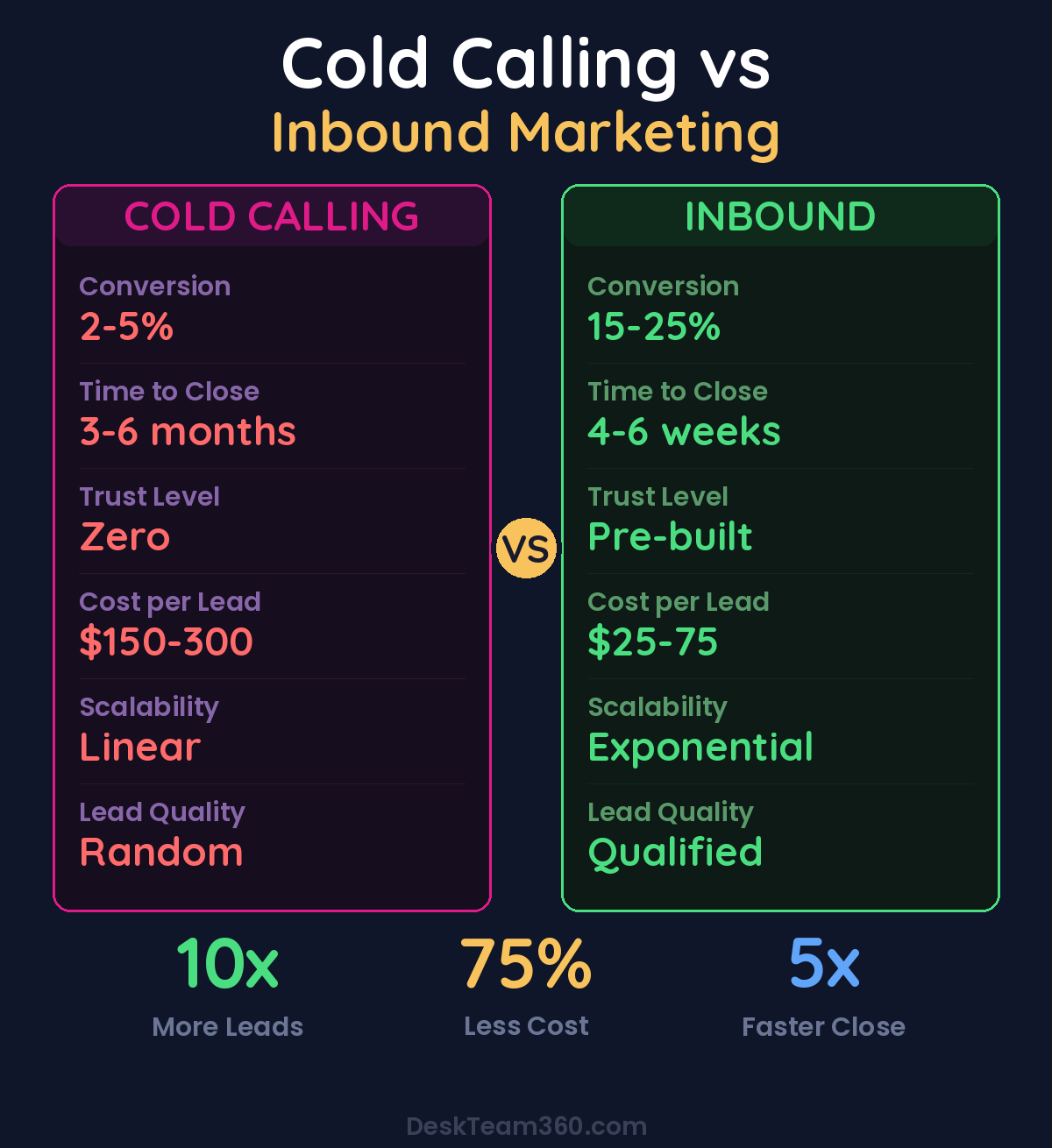
Consultants who use this webinar structure see 15-25% booking rates from qualified attendees, compared to 2-5% from cold outreach.
SEO: The Long Game That Pays Off
SEO might seem slow compared to LinkedIn or webinars, but it’s the most sustainable source of leads for consultants. Once you rank for key terms, you get qualified traffic every month without spending a dime on ads.
Target three types of keywords. Problem-aware keywords like “industry plus problem.” Solution-aware keywords like “type of consultant plus industry.” Comparison keywords like “consultant vs agency” or “when to hire a consultant.”
Write comprehensive guides for each keyword cluster. Aim for 2,000+ word articles that genuinely help the reader. Not thin content stuffed with keywords, but real resources that prospects bookmark and share.
If you serve a specific geographic market, local SEO becomes critical. Set up and optimize your Google Business Profile. Get listed in local business directories. Create location-specific service pages on your website. Collect Google reviews from past clients.
When a CEO in Denver searches “management consultant Denver,” you want to show up first. Our guide on how to measure marketing ROI applies to SEO tracking too, you need to know which keywords and content drive actual business.
Email Marketing: Your Most Valuable Asset
Your email list is the most valuable marketing asset you own. Social media platforms can disappear, search algorithms can change, but your email list belongs to you.
Build your list with a lead magnet on your website. Create a framework, assessment, or guide that your ideal clients would genuinely value. Capture emails from webinar registrations. Offer your lead magnet in LinkedIn connection messages and content. Always have a way to capture attendee emails at speaking engagements.
The best consultant emails teach something valuable every time. Your weekly or biweekly email should provide genuine insight, not promotional fluff. Real thinking that demonstrates your expertise and keeps you top of mind when problems arise.
Related reading: How to Write Meta Descriptions That Get Clicks (With Examples).
Related: Fractional Marketing Team: Full Team Output Without Full-Time Payroll.
For industry research and benchmarks, check out HubSpot Marketing.
Structure each email with one core insight or framework, one real-world example or case study snippet, one relevant resource like an article or tool, and a soft call to action like “If you’re dealing with this, let’s talk.”
Consistency matters more than perfection. A consultant who emails every Tuesday for 52 weeks straight will build more trust than one who sends a beautifully designed quarterly newsletter.
Speaking and Podcast Guesting: Original Authority Building
Public speaking is the original authority-builder, and it’s still incredibly effective for consultants.
Start with podcasts. There are thousands of business podcasts hungry for expert guests. Apply to 5-10 per month. Submit speaking proposals to conferences in your target industries. Speak at local business events like chambers of commerce, industry associations, and executive groups. Virtual events have a lower barrier to entry with wider reach and less travel.
Every speaking engagement generates content when you repurpose the recording. It builds credibility when you add “As seen at” logos to your website. It creates connections when you follow up with attendees.
Your Consulting Website: The Hub of Everything
All of these strategies funnel back to your website. It needs to be sharp, professional, and conversion-optimized.
Your consulting website needs clear positioning and value proposition above the fold. Include a dedicated case studies page with measurable results. Create service pages for each offering with clear deliverables. Write an about page that builds authority, not just biographical information. Maintain a blog with regular thought leadership content. Provide an easy booking mechanism for consultation calls. Design it professionally to match the premium nature of your services.
If your website doesn’t look like it belongs to a $15,000 per month consultant, you’ll struggle to charge like one. First impressions matter, and your website is often the first impression. Understanding website copy that converts can help you nail the messaging and positioning.
Building Your Marketing System Without Doing It All Yourself
Here’s the irony. Consultants advise their clients to delegate and build systems. But most consultants try to DIY their own marketing.
The smartest move is focusing on the content only you can create. Write the thought leadership pieces. Develop the frameworks. Build the relationships. Then delegate the production work like website design and updates, graphic design for social media and lead magnets, video editing for webinar replays, email template design and landing page building, and case study layout and design.
Watch out: Many consultants get stuck in perfectionist mode and never publish anything. Done is better than perfect. Your first blog post doesn’t need to be a masterpiece, it just needs to demonstrate your thinking and help your audience.
This approach lets you focus on what you do best while ensuring your marketing materials look professional and convert visitors into prospects.
Stop Chasing Clients, Start Attracting Them
Cold calling might have worked in 1995, but today’s decision-makers research solutions before they talk to vendors. They read content, follow experts, and build trust over time before making purchasing decisions.
The consultants winning today understand this shift. They’ve replaced cold calling with systems that attract prospects who are already educated, interested, and qualified.
Authority content that demonstrates expertise. LinkedIn presence that keeps you visible to decision-makers. Case studies that prove your results. Webinars that let prospects experience your approach. SEO that captures prospects when they’re actively searching. Email marketing that nurtures relationships over time.
This isn’t slower than cold calling, it’s more efficient. Instead of interrupting 100 people to find one prospect, you create content that attracts 10 qualified prospects who found you when they were ready to solve their problem.
Build these systems once, and they work for years. That’s the difference between chasing clients and attracting them.
Free 5-Minute Video
See How DeskTeam360 Works in Under 5 Minutes
Watch the short video and see exactly how we handle design, development, and marketing implementation — so you don't have to.
Watch the Video →