


Should You Outsource Funnel Building? (ClickFunnels, GHL, and What Works)
The $43,000 Funnel That Changed Everything
When you outsource funnel building, you free up your team to focus on what actually moves the needle. Three years ago, I watched a coaching client spend eight weeks building his first sales funnel. Eight weeks of nights and weekends wrestling with ClickFunnels, writing terrible copy, and creating pages that looked like they were designed in 2003. His conversion rate? A brutal 0.8%.
📋 Table of Contents
Then he hired someone competent to rebuild the entire thing. Same offer, same traffic source, same price point. New funnel converted at 3.2%. That 2.4% improvement meant an extra $43,000 in revenue over the next six months from the exact same ad spend.
After helping 400+ clients navigate this exact decision at DeskTeam360, I know exactly when you should build your own funnels and when you should pay someone else to do it right. Let me save you eight weeks of frustration and thousands in lost conversions.
What Funnel Building Actually Involves
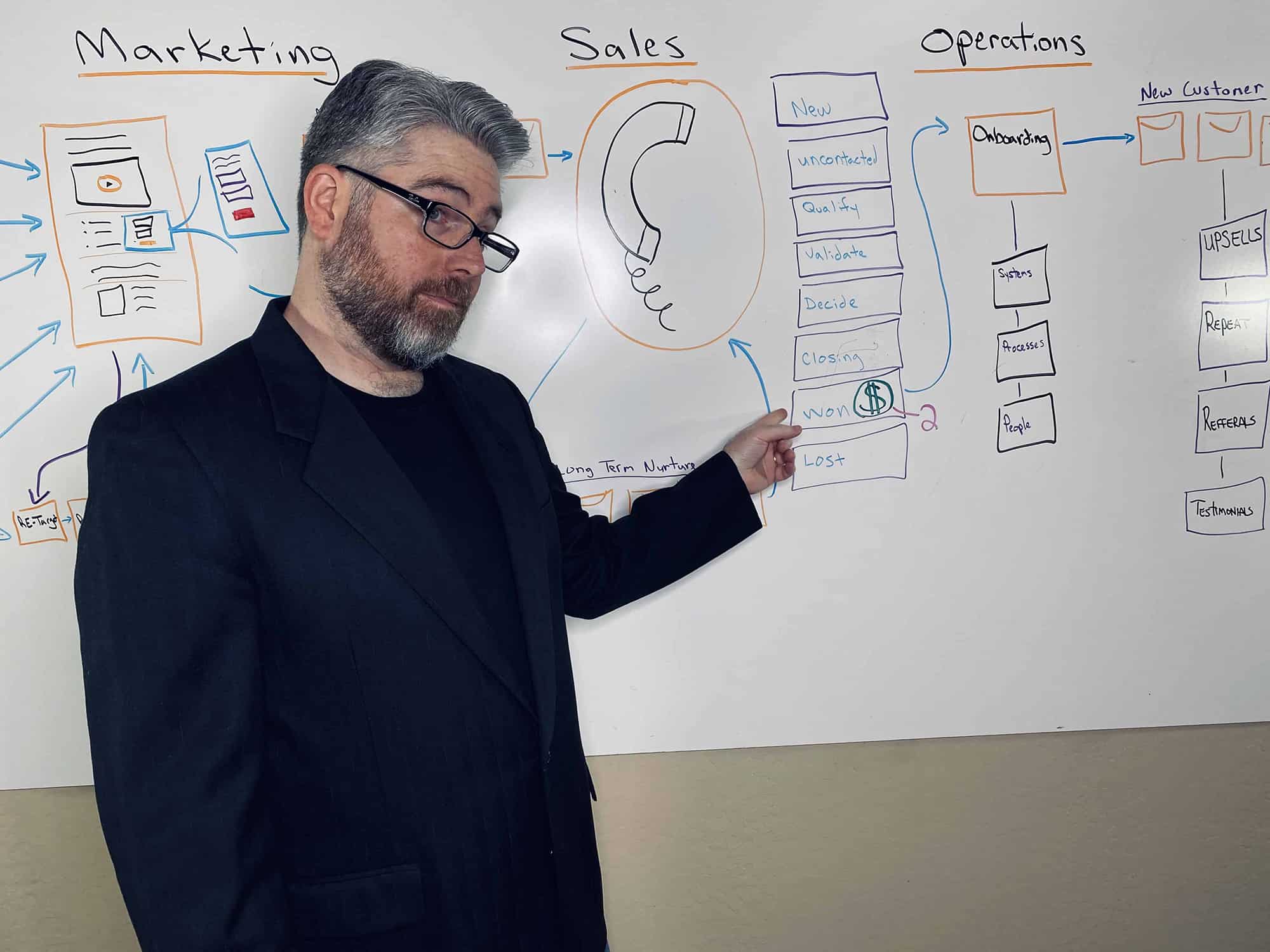
Most people think “building a funnel” means dragging some blocks around in ClickFunnels. That’s like saying “building a house” means hammering some nails. A proper funnel requires seven distinct skill sets working together seamlessly.
First, there’s the strategy layer. What pages do you need? In what order? What happens when someone opts in but doesn’t buy? What about people who buy but don’t show up? This isn’t template work, it’s architecture.
Then you need copywriting that actually converts. Not the generic “Are you tired of…” garbage that every guru template includes. Copy that speaks to your specific market’s specific pain points in language they actually use. Good funnel copy can double conversion rates. Bad copy kills funnels that should work.
Design comes next, and I don’t mean “make it pretty.” I mean conversion-focused design that guides the eye exactly where you want it to go. Visual hierarchy that emphasizes the right elements. Mobile layouts that work on every device. Social proof positioning that builds credibility without looking desperate.
The technical implementation is where most DIY attempts die. Setting up tracking pixels, configuring email automations, integrating payment processors, building conditional logic flows. Get any of this wrong and your funnel either breaks completely or bleeds money through tracking gaps.
Watch out: The biggest mistake I see is treating funnel building like a weekend project. Each piece, copywriting, design, development, automation setup, needs focused time to get right. Rush any of it and the whole system underperforms.
Then there’s the ongoing optimization. A/B testing headlines, button colors, page layouts. Analyzing where people drop off and why. Refining email sequences based on open and click data. The best funnels aren’t built once, they’re continuously improved.
Free 5-Minute Video
See How DeskTeam360 Works in Under 5 Minutes
Watch the short video and see exactly how we handle design, development, and marketing implementation — so you don't have to.
Watch the Video →
When You Should Build It Yourself
I’m going to be honest about when DIY makes sense, because sometimes it does.
If you’re testing a completely new offer and have no idea whether people will buy it, start simple. Build an ugly landing page with a basic email sequence. If people convert on the ugly version, then you’ve validated there’s demand worth investing in professionally.
DIY also works if you genuinely have more time than money. Not the “I’m too cheap to hire someone” version of that excuse, but the real version where every $500 spent on outsourcing means you can’t eat this month. In that case, invest the time to learn one platform well and build simple funnels yourself.
The sweet spot for DIY is simple opt-in funnels. Landing page captures email, thank you page delivers the lead magnet, three-email sequence builds trust and makes a soft offer. If you can write decent copy and follow template instructions, you can probably build this yourself for under $100 in tools.
But here’s where most people get it wrong. They start with DIY because they’re “just testing,” then their funnel starts working, they scale up ad spend, and they never upgrade the amateur funnel to something professional. That’s leaving money on the table every single day.
When to Outsource (And Why It Pays for Itself)
The math on outsourcing gets compelling fast. If your time is worth more than $50 per hour and you’re driving real traffic to your funnel, outsourcing is a no-brainer.

Here’s the reality: building a professional sales funnel takes 40-60 hours if you know what you’re doing. If you don’t, double that. So you’re looking at 80-120 hours of your time to build something that might convert at 2%, or you can pay $3,000-$5,000 to someone who builds funnels professionally and get something that converts at 4%.
Let’s say you’re driving $2,000/month in ad traffic to your funnel. The difference between a 2% and 4% converting funnel is $2,400 per year in additional revenue. The professional funnel pays for itself in three months, then generates pure profit for years.
Clients who switch from DIY to professional funnels see average conversion improvements of 150-300% on the same traffic and offers.
Outsourcing becomes mandatory when you’re dealing with complex automations. Conditional logic based on behavior. Different email sequences for different traffic sources. Upsell and downsell sequences with multiple decision points. You can waste weeks trying to figure out automation setups that an experienced builder can implement in hours.
The biggest reason to outsource? Opportunity cost. Every hour you spend wrestling with Zapier integrations is an hour you’re not spending on activities that actually grow your business. Creating better offers. Building relationships. Driving traffic. The stuff only you can do.
Platform Wars: ClickFunnels vs GoHighLevel vs Everything Else
Platform choice affects both the quality of your outsourcing options and the cost. Each platform has its own ecosystem of builders with different skill levels and pricing.
ClickFunnels remains the easiest platform to outsource because it’s been around the longest. There are thousands of ClickFunnels designers ranging from $500 simple landing page builders to $10,000 full-system architects. The downside is you’re locked into ClickFunnels’ ecosystem and paying $97-$297 per month forever. But the ecosystem is mature, the templates are solid, and finding someone to build in it is trivial.
GoHighLevel has exploded over the past two years, especially among agencies. It’s more powerful than ClickFunnels because it includes CRM, email marketing, SMS, appointment scheduling, and more in one platform. The catch? It’s also more complex. Finding someone who really knows GHL well enough to build complex automations is harder than finding ClickFunnels builders. Make sure your outsourced builder has specific GHL experience, not just “I can figure it out.”
WordPress with page builders like Elementor gives you the most flexibility and keeps everything on your own domain. The talent pool is huge since every WordPress developer can technically build landing pages. The key word is “technically.” Make sure your WordPress builder understands conversion optimization, not just making pages that look nice. Our web development guide covers what to look for in WordPress specialists.
All-in-one platforms like Kajabi, Kartra, and Systeme.io work well for specific use cases, mainly course creators and membership sites. The challenge is finding builders with experience on your specific platform. Each one has unique quirks and limitations that generic “funnel builders” might not understand.
Pro tip: Whatever platform you choose, your outsourced builder should have at least 20 completed projects on that specific platform. Don’t let someone learn on your dime.
What Parts to Keep In-House vs Outsource
You don’t have to outsource everything. Smart outsourcing is about identifying the highest-ROI activities to delegate while keeping strategic control.
Always outsource design and development. This is where professional expertise pays the biggest dividends. A designer who understands conversion principles will create pages that outperform anything you’d build yourself. Visual hierarchy, CTA placement, trust signals, mobile optimization. These details matter enormously for conversion rates, and they’re exactly what professionals do better than amateurs.
Usually outsource email automation setup. The technical implementation of email sequences is tedious, error-prone, and time-consuming. Triggers, conditional logic, tagging, segmentation, deliverability optimization. Getting any piece wrong means leads fall through cracks or emails land in spam. Let someone who sets up automations daily handle this complexity.
Sometimes outsource copywriting, but be careful here. Good funnel copy requires deep understanding of your audience, your offer, and your voice. If you can find a copywriter who really gets your market, absolutely outsource this. If not, write the first draft yourself and have someone professional polish it. Understanding how to write sales copy helps even if you outsource it.
Always keep strategy and offer structure in-house. Nobody knows your customers’ pain points better than you do. The fundamental decisions about what to offer, at what price, with what bonuses, targeting what objections need to come from you. Outsource the building, not the thinking.
The Real Cost of Funnel Building
Here’s what funnel building actually costs across different approaches, because the sticker price isn’t the real price.
DIY costs zero dollars and 80-120 hours of your time, plus ongoing maintenance, optimization, and troubleshooting. If your time is worth anything, DIY is expensive. Factor in opportunity cost and most business owners lose money going the DIY route.
Freelancers charge $1,500-$8,000 depending on complexity and skill level. A simple opt-in funnel from a decent freelancer runs $1,500-$3,000. A complete sales funnel with email sequences, upsells, and automations can be $5,000-$8,000. Quality varies wildly, so vet carefully.
Agencies charge $5,000-$25,000+ for complete funnel systems. You’re paying for experience, strategy, and typically better results. High-end agencies often include strategy consulting, copywriting, design, development, and ongoing optimization.
Subscription services include funnel building as part of monthly design and development packages. At DeskTeam360, funnel projects are part of your regular monthly allocation. No per-funnel pricing, no scope creep, no surprise invoices. Submit the brief, get the funnel.
How to Brief a Funnel Build (So You Actually Get What You Want)
The quality of your funnel is directly proportional to the quality of your brief. Here’s how to set your builder up for success.
Start with the offer. What exactly are you selling or giving away? “Lead magnet” is not specific enough. “28-page guide on reducing customer acquisition costs for SaaS companies with 10-100 employees” tells your builder exactly what they’re working with. Include price points, bonuses, guarantees, anything that affects messaging.
Define your audience precisely. Who’s landing on this funnel? Demographics, psychographics, awareness level, pain points. A funnel targeting enterprise decision-makers looks completely different from one targeting first-time entrepreneurs. Include customer research, testimonials, common objections anything that helps your builder understand who they’re writing for.
Specify the traffic source. Where are these visitors coming from? Facebook ads to cold traffic need different messaging than email broadcasts to warm subscribers. Google searchers have different intent than YouTube viewers. Traffic source affects everything from page length to trust signals to objection handling.
Provide reference funnels. Share 3-5 funnels you’ve seen that you like. Not to copy, but to communicate style, tone, and approach. “I like how this funnel uses video testimonials” or “I want this type of guarantee presentation” saves hours of back-and-forth revisions.
Include copy direction or actual copy. Either write the copy yourself or provide detailed direction: key benefits, main objections, social proof elements, transformation promises. Don’t leave your builder guessing about messaging.
Document technical requirements. Platform, email tool, payment processor, analytics tracking, integrations with your existing systems. The more technical details you provide upfront, the fewer surprises later.
Six Outsourcing Mistakes That Kill Funnels
I’ve seen these mistakes cost clients thousands in lost revenue. Here’s how to avoid each one.
Mistake one: outsourcing too early. Don’t build a $5,000 funnel for an offer you haven’t validated. Test with a simple DIY version first. If people buy despite the amateur presentation, then invest in professional execution. If they don’t buy, a prettier funnel won’t fix a broken offer.
Mistake two: choosing cheap over competent. A $300 Fiverr funnel will cost you thousands in lost conversions. When you’re driving real ad spend to a funnel, the builder’s fee is the smallest cost in the equation. Poor conversion rates dwarf whatever you’d save hiring the cheapest option.
Mistake three: ignoring mobile optimization. Over 70% of traffic is mobile now. If your builder shows you desktop mockups and calls it done, push back immediately. Every page needs mobile-first design, not desktop design crammed onto phones.
Mistake four: not testing the technical implementation. Beautiful pages mean nothing if the automations don’t work. Test every single step with real email addresses before launch. Opt-in forms, email deliverability, payment processing, redirect sequences. One broken link kills the entire system.
Mistake five: overcomplicating version one. Your first funnel doesn’t need 12 upsells, conditional logic based on behavior, and dynamic personalization. Start simple, get it converting, then add complexity based on data.
For industry research and benchmarks, check out Clutch.co.
Mistake six: not owning your assets. Make sure you own everything: design files, copy documents, automation sequences, tracking setups. If everything lives in your builder’s accounts, you’re trapped. Own your assets so you can switch builders or bring things in-house later.
Finding Builders Who Actually Know What They’re Doing
The best funnel builders are busy enough that they don’t need to advertise heavily. Here’s where to find them.
Platform-specific communities are goldmines. Every funnel platform has active Facebook groups, Slack communities, or forums. ClickFunnels has some of the most active communities. Look for people providing helpful answers, not just pitching their services. The builders who help others publicly usually do good work privately.
Referrals from other business owners trump everything else. Ask people in your industry who built their funnels. Most business owners love sharing vendor recommendations when the work was good. The best builders get most of their work through referrals.
Freelance marketplaces work, but filter carefully. Look for funnel-specific experience, not just generic web design. Read reviews that mention conversion improvements, not just “nice design.” Ask for examples of funnels they’ve built in your industry.
For ongoing funnel needs, subscription design services like DeskTeam360 handle funnel building as part of broader marketing support. This works well if you’re launching new offers regularly, running seasonal campaigns, or need continuous optimization.
The ROI Reality Check
Let me put the ROI in concrete terms so you can make an informed decision.
Say you’re driving $3,000 monthly in ad spend to your current funnel that converts at 2.1%. That generates $1,260 in monthly revenue. A professional rebuild that improves conversion to 3.8% would generate $2,280 monthly from the same ad spend. That’s $12,240 in additional annual revenue from the same marketing investment.
If the professional funnel costs $4,500 to build, it pays for itself in 4.4 months and generates $7,740 in pure additional profit over the first year. Every year after that, it’s $12,240 in extra revenue you wouldn’t have had with the amateur version.
The numbers get more compelling as your traffic increases. Double your ad spend to $6,000 monthly, and that same conversion improvement means $24,480 in additional annual revenue. The professional funnel now pays for itself in 2.2 months.
Businesses that invest in professional funnel design see average ROI of 340% in the first year from conversion improvements alone.
This is why smart business owners view funnel building as investment, not expense. You’re buying a revenue-generating asset that pays dividends for years. The only question is whether you want those dividends or not.
Stop Wasting Weekends on Page Builders
Here’s my blunt assessment: if you’re driving real traffic and making real money, DIY funnel building is a waste of your most valuable resource. Your time should be spent on activities that only you can do: creating offers, building relationships, developing strategy, driving traffic.
Professional funnel builders have optimized processes, conversion frameworks, and technical systems that took years to develop. You’re not going to match that expertise in a weekend of YouTube tutorials. Pay for competence and spend your time on what actually grows your business.
The businesses that scale fastest treat funnel building like they treat accounting or legal work. Critical functions that require expertise, but not functions they try to learn themselves. They outsource to professionals and focus on their zone of genius.
Your funnel is the engine that turns traffic into revenue. Don’t build that engine with spare parts and hope. Invest in professional execution and watch your conversions transform.
Free Template
The Ultimate Task Delegation Template
Stop guessing what to hand off. This template shows you exactly what to delegate, how to brief it, and how to QA the results.
Get the Free Template →