


How to Manage Multiple Client Projects Without Losing Your Mind
The Agency Owner’s Bandwidth Problem
Figuring out how to manage multiple client projects doesn’t have to be complicated. It’s Tuesday at 3pm. You’ve got a client melting down because their Facebook ads aren’t live yet, another one demanding “urgent changes” to the website you launched last week, and a third one asking when their “simple” logo design will be done. Your phone hasn’t stopped buzzing all day, your to-do list looks like a nightmare, and you’re wondering how the hell other agency owners make this look easy.
📋 Table of Contents
I’ve been there. After 12+ years of running agencies and serving 400+ clients, I’ve had seasons where I managed 50+ active accounts simultaneously. Some periods were smooth sailing. Others were pure chaos. The difference was never about working longer hours or having superhuman focus. It was about having the right systems and the right people handling the execution while I focused on what only I could do.
Here’s the playbook for managing multiple client projects without losing your mind, your clients, or your health. No fluff, just what actually works when you’re drowning in deliverables.
Build a Project Management System That Actually Works
I don’t care if you use Asana, Monday, ClickUp, Notion, Basecamp, or a well-organized spreadsheet. What matters is having ONE system where every project, task, and deadline lives. Not three different tools, not a mix of spreadsheets and sticky notes, not your email inbox. One system.
Your project management system needs four non-negotiable elements. Every client gets their own space, no mixing projects between accounts. Every task has a specific person responsible for it, no orphaned deliverables floating around. Every task has a real deadline that accounts for review time before the client deadline. And you can open your system and know exactly where everything stands in under 60 seconds.
Pro tip: Set up four views in whatever tool you choose. A master dashboard showing all clients and projects, individual client boards for detailed task management, a team workload view showing what each person is working on, and a calendar view with all deadlines. If you can’t create all four views, find a different tool.
Stop Flying Blind With Your Project Pipeline
Most agency owners are reactive. A client emails, they scramble to figure out what’s due when. A deadline gets missed, they frantically try to piece together what went wrong. This is exhausting and completely avoidable.
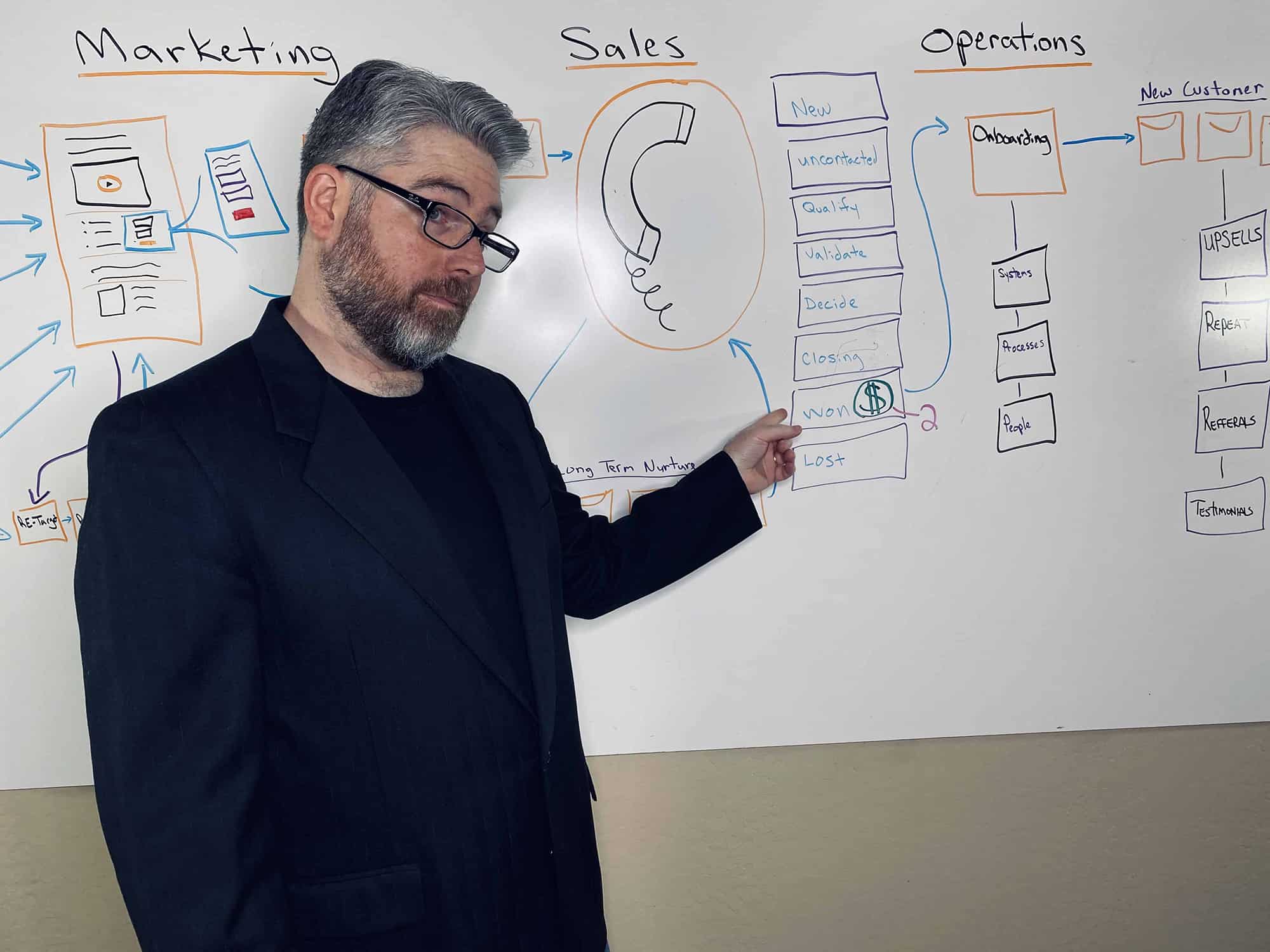
Your master dashboard should show you everything at a glance. Which projects are on track, which ones are behind, which ones need your attention today. Color coding helps, red for urgent, yellow for important, green for on track. Sounds simple, but I’ve watched agency owners stress themselves into the ground because they didn’t know what was actually due this week across all their clients.
Free 5-Minute Video
See How DeskTeam360 Works in Under 5 Minutes
Watch the short video and see exactly how we handle design, development, and marketing implementation — so you don't have to.
Watch the Video →
Standardize Your Client Workflows
When every client project follows a different process, you’re creating chaos. One client wants revisions via email, another through your project management tool, a third one texts you changes at 9pm. One project has six approval steps, another has none until the very end. This madness stops now.
Standardization is what separates amateur agencies from professional ones. If you deliver the same types of projects repeatedly, create templates for everything. Task checklist templates with every step from brief to delivery pre-loaded. Intake forms with standard questions for every new request. Clear approval workflows showing how work moves from draft to review to approved to delivered. File naming conventions so anyone can find anything without playing detective.
Batch similar work together whenever possible. If you have 10 clients who all need social media graphics this week, group them together. Your designer cranks out all the social media work in one focused session instead of context-switching between 10 different project types all day. Same approach works for copywriting, development, client calls. Context switching is a productivity killer that most agencies don’t even realize they’re doing.
Set Boundaries That Actually Stick
If clients can text you at midnight and expect a response, you don’t have boundaries. You have a hostage situation.
This conversation happens during onboarding, not when problems arise. We respond to project requests within 24 business hours. All project communication goes through our management system, email is for general business discussion only. We have standing weekly check-ins, additional calls can be scheduled with 24 hours notice. This is what’s included in your package, anything outside this scope requires a separate conversation about budget and timeline.
The revision and approval process needs clear rules too. Define how many revision rounds are included in the project cost. Set a maximum turnaround time for client feedback, something like “feedback within 48 hours or the project timeline shifts accordingly.” Make it crystal clear that significant direction changes restart the revision count. These aren’t harsh rules, they’re professional standards that protect both you and the client from scope creep hell.
Watch out: Boundaries feel rude when you’re setting them, but they feel professional when you’re enforcing them. Clients respect agencies with clear processes more than ones that bend over backwards to accommodate every random request.
Delegate the Execution Work Ruthlessly
Here’s the uncomfortable truth that took me years to accept. If you’re personally doing execution work for clients, you can’t effectively manage multiple projects. You’re either managing projects or executing tasks, but you can’t do both well simultaneously.
Your job as the agency owner is client relationships and communication, strategy and creative direction, quality assurance and final review, new business development, and team management. That’s it. Everything else should be delegated to someone who’s better at it than you are and costs less per hour than you’re worth.
The execution work that should be off your plate includes graphic design, web development, content writing, video editing, email campaign setup, social media scheduling, landing page builds, and routine website updates. Basically, if it’s a deliverable that follows a defined process, someone else should be doing it.
The challenge is cost. Hiring specialists for all of this gets expensive fast. A full in-house team with a designer, developer, and content creator runs $150,000 to $250,000 annually before you factor in benefits, equipment, and management overhead. Most agencies can’t afford that until they’re doing multiple six figures in revenue.
That’s exactly why services like DeskTeam360 exist. One flat monthly rate gets you an entire execution team that works as an extension of your agency. Submit work for any client, get it back in 24-48 hours, deliver to your client under your brand. It’s how solo agency owners manage 20+ clients without hiring 10 employees.
Master the Art of Prioritization
Not all tasks are equal. Not all clients are equal. Not all deadlines are real deadlines. You need a framework for deciding what gets done first when everything feels urgent.
I use a simple priority system that’s saved my sanity countless times. Critical items are revenue-impacting with hard deadlines or client-facing launches, these get done immediately with your best resources assigned. Important items include strategic work, upcoming deadlines, and maintaining client expectations, these get scheduled for this week. Standard items are routine deliverables with flexible timelines, these get queued normally. Low priority covers nice-to-have improvements, internal projects, and backlog items that get done when capacity allows.
Spend 15 minutes every morning reviewing priorities across all clients. This single habit prevents more fires than any tool, process, or team member ever will. When you know what’s actually urgent versus what feels urgent, you make better decisions about where to focus your energy.
We break this down further in marketing for consultants: how to get clients without cold calling.
For a deeper dive, check out our guide on outsource course and curriculum design: a practical guide.

Implement a Communication Rhythm That Prevents Panic
Clients don’t freak out when projects run behind schedule. They freak out when they don’t know what’s happening. Silence breeds anxiety, and anxious clients become problem clients fast.
Your communication cadence should be predictable and proactive. Every client gets a brief status update weekly, even if there’s nothing new to report. “Everything is on track for delivery Friday” is a perfectly valid update that prevents three follow-up emails. More detailed progress reports happen biweekly or monthly depending on project scope, covering completed work, current status, and upcoming priorities with actual dates.
When something goes wrong, communicate immediately. Don’t wait until the deadline to mention that the project is running late. Don’t hope the client won’t notice that the deliverable isn’t what they expected. Address problems when they’re small, not when they’ve grown into relationship-threatening disasters.
Proactive communication is the biggest differentiator between agencies that retain clients long-term and agencies that constantly churn through new accounts. It costs nothing and prevents most of the drama that makes agency life miserable.
Build Capacity Before You’re Drowning
The worst time to find additional help is when you’re already overwhelmed. The best agency owners build capacity ahead of demand, not in response to crisis.
You need elastic capacity that can scale up when big projects land without scrambling for last-minute solutions. Have an outsourced execution partner like DeskTeam360 in place before you need surge capacity. Maintain relationships with 2-3 vetted freelancers for specialized work you don’t outsource regularly. Document your processes clearly so new help can get productive immediately instead of spending days figuring out your system.
Agencies with pre-built capacity scale 3x faster than those that hire reactively when demand spikes.
The agencies I’ve watched crash and burn are the ones that say “we’ll figure it out when we need to.” You won’t figure it out. You’ll panic, hire poorly, deliver subpar work, and damage client relationships. Build capacity now while you can think clearly and make good decisions.
Protect Your Calendar Like It’s Your Most Valuable Asset
Because it is. As an agency owner managing multiple clients, your time and attention are the bottleneck that determines whether everything flows smoothly or falls apart.
Time blocking isn’t optional, it’s survival. I recommend dedicating Monday mornings to planning and prioritization for the entire week. Monday and Tuesday become your client communication days, when calls and meetings happen. Wednesday and Thursday are for strategy work, quality assurance, and creative direction that requires deep focus. Friday morning is for reviewing the week’s output and planning the next week. Friday afternoon is for business development and internal improvements.
Group similar activities together instead of scattering them across every day. Batch client calls into specific time blocks. Protect 2-3 hour windows for deep work that can’t happen between meetings. Don’t let urgent but unimportant tasks hijack your entire day. When you control your calendar instead of letting it control you, your productivity doubles and your stress level drops significantly.
For industry research and benchmarks, check out HBR on Outsourcing.
Know When to Fire a Client
Some clients make managing multiple projects impossible, not because of their volume but because of their behavior. They constantly expand scope without budget discussions. They disrespect your boundaries and response times. They micromanage every tiny deliverable. They provide vague creative briefs then blame you when the output doesn’t match their unstated vision. They’re rude to your team members.
Watch out: One toxic client can absorb the bandwidth of three good ones. They’ll consume your mental energy, stress out your team, and make you question whether you’re any good at running an agency.
I know firing clients is scary because revenue is revenue. But I’ve never fired a problem client and regretted it. The mental space they free up always gets filled with better opportunities and better relationships. Your remaining clients get better service, your team is happier, and you remember why you started the agency in the first place.
The math works too. Replace one difficult client who pays $3,000 monthly but takes 60 hours of management time with a pleasant client who pays $2,500 but only needs 15 hours. You made less revenue but dramatically more profit per hour invested.
The Tools That Actually Matter
Tool selection matters less than tool commitment. Pick a project management system and stick with it long enough to optimize your workflows. ClickUp, Monday, or Asana all work fine if you configure them properly. Track time with Toggl or Harvest so you know where hours are actually going versus where you think they’re going. Handle client communication through Slack with separate channels per client or use your project management tool’s messaging features.
For file management, Google Drive with a standardized folder structure beats fancy solutions that require training. Invoice through FreshBooks, QuickBooks, or HoneyBook depending on your accounting preferences. And for execution work, having a reliable partner like DeskTeam360 means you can take on bigger projects without hiring a full team.
The key is integration. Your tools should talk to each other instead of creating data silos that require manual updates. Time tracking should connect to invoicing. Project management should connect to file storage. Client communication should reference specific tasks and deadlines. When information flows seamlessly between systems, managing multiple projects becomes significantly easier.
Focus on Systems, Not Heroics
Managing multiple client projects successfully comes down to two things: systems that organize the chaos and people who execute the work reliably. If either piece is missing, you’ll burn out or blow up client relationships.
Build the systems first because they’re the foundation for everything else. Standardize your workflows, implement proper project management, establish communication rhythms, and document processes clearly. Then build your team, whether that’s hiring in-house specialists, outsourcing to a white-label partner, or using a combination approach that fits your budget and growth stage.
Your role as the agency owner isn’t to do all the work personally. It’s to ensure all the work gets done well, on time, and profitably. Delegate everything that doesn’t require your specific expertise, focus on high-value activities only you can handle, and watch your agency grow without sacrificing your sanity.
The agency owners who thrive long-term aren’t the ones working the most hours. They’re the ones who build the best systems, hire the right people or outsource to the right teams, and protect their time for strategic activities. Start implementing these strategies this week, don’t wait until you’re drowning to build the systems that will keep you afloat.
Free Template
The Ultimate Task Delegation Template
Stop guessing what to hand off. This template shows you exactly what to delegate, how to brief it, and how to QA the results.
Get the Free Template →