📋 Table of Contents
The Lands End School – DeskTeam360’s Process Made Everything So Easy
Why Most Private Schools Struggle With Parent Communication
Let’s talk about easy website process. It’s 3pm on a Tuesday. A parent needs to know if their child can stay late for aftercare. They call the school. No answer. They email. Auto-reply says “We’ll respond within 24-48 hours.” By the time they get a response, they’ve already had to scramble for backup childcare and they’re frustrated with the school.
I’ve watched this scenario play out hundreds of times across different industries, but private schools have it especially rough. Parents are paying premium tuition and expect premium service. When communication breaks down, those $2,000-per-month families start looking elsewhere.
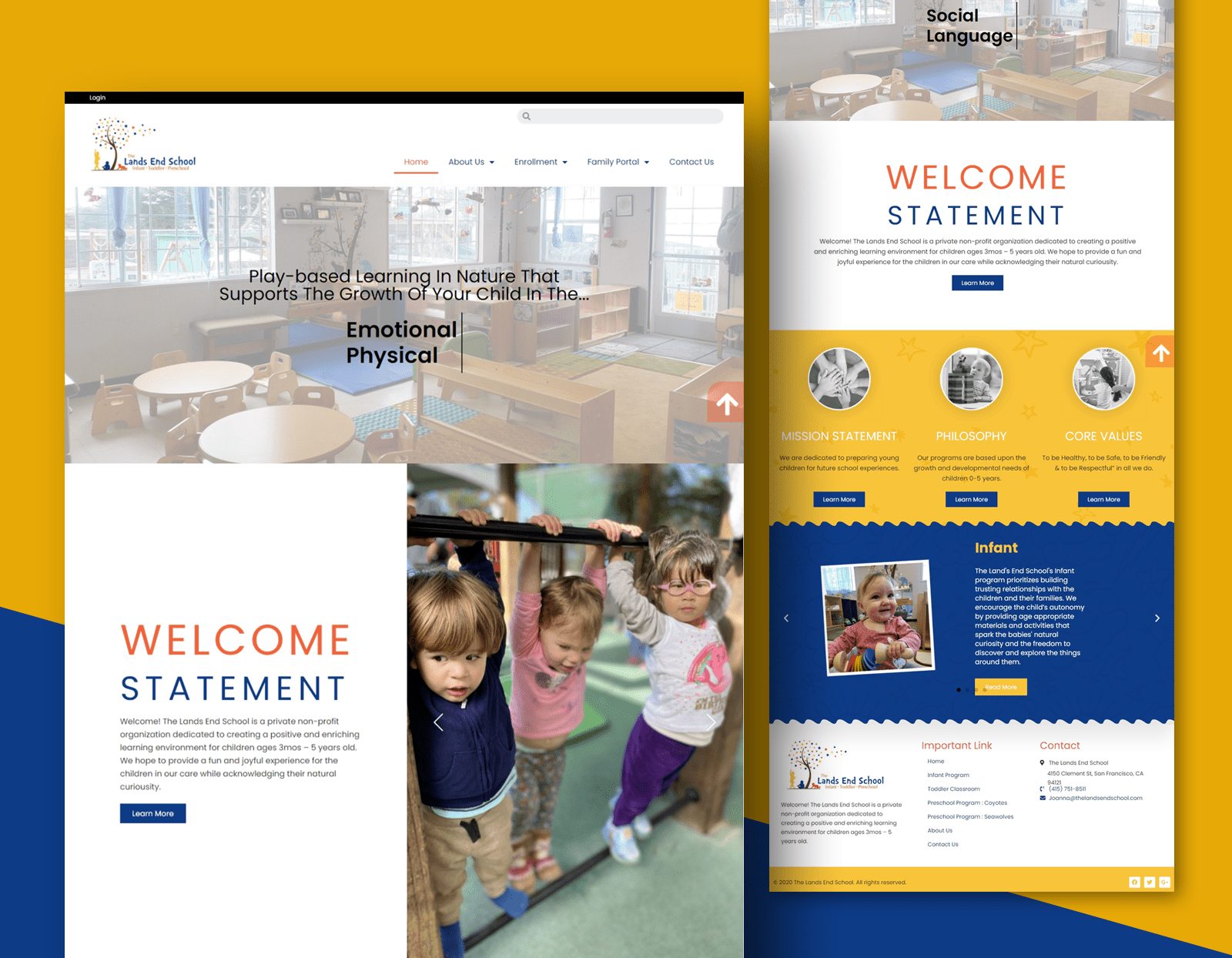
The Lands End School in San Francisco faced exactly this problem in early 2020. They were a high-end preschool with engaged parents, but their communication systems were completely broken. Parents couldn’t reach staff easily. Tour scheduling was a nightmare. Applications got lost in email chains. Their website was basically a digital business card with contact information.
Here’s how we fixed it, and why the approach works for any service-based business dealing with demanding customers who expect instant responses.
The Real Problem Wasn’t Technology
When Lands End School first reached out to us, they thought they needed a prettier website. That’s what most businesses think when their customer experience is broken. “Our site looks outdated, so customers must not trust us.”
Wrong. The website was just a symptom. The real problem was that they had no systems for managing customer relationships at scale.
Watch out: Most businesses focus on the visual problems first because they’re obvious. But if your communication processes are broken, a beautiful website just makes it more frustrating when customers can’t actually get help.
Here’s what was actually happening at Lands End. Parents would call during the day when staff were focused on kids. Calls went to voicemail. Parents would email with questions about enrollment, but there was no system for tracking which stage each family was in. Tour requests got buried in someone’s personal inbox. When families did visit, there was no follow-up process to convert interest into enrollment.
They weren’t losing families because their brand was bad. They were losing families because their operations couldn’t support the experience their brand promised.
Building Systems That Scale Premium Service
The solution wasn’t just a website redesign. We built an entire customer experience system that automated the routine stuff so staff could focus on the high-value interactions.
Automated Tour Scheduling
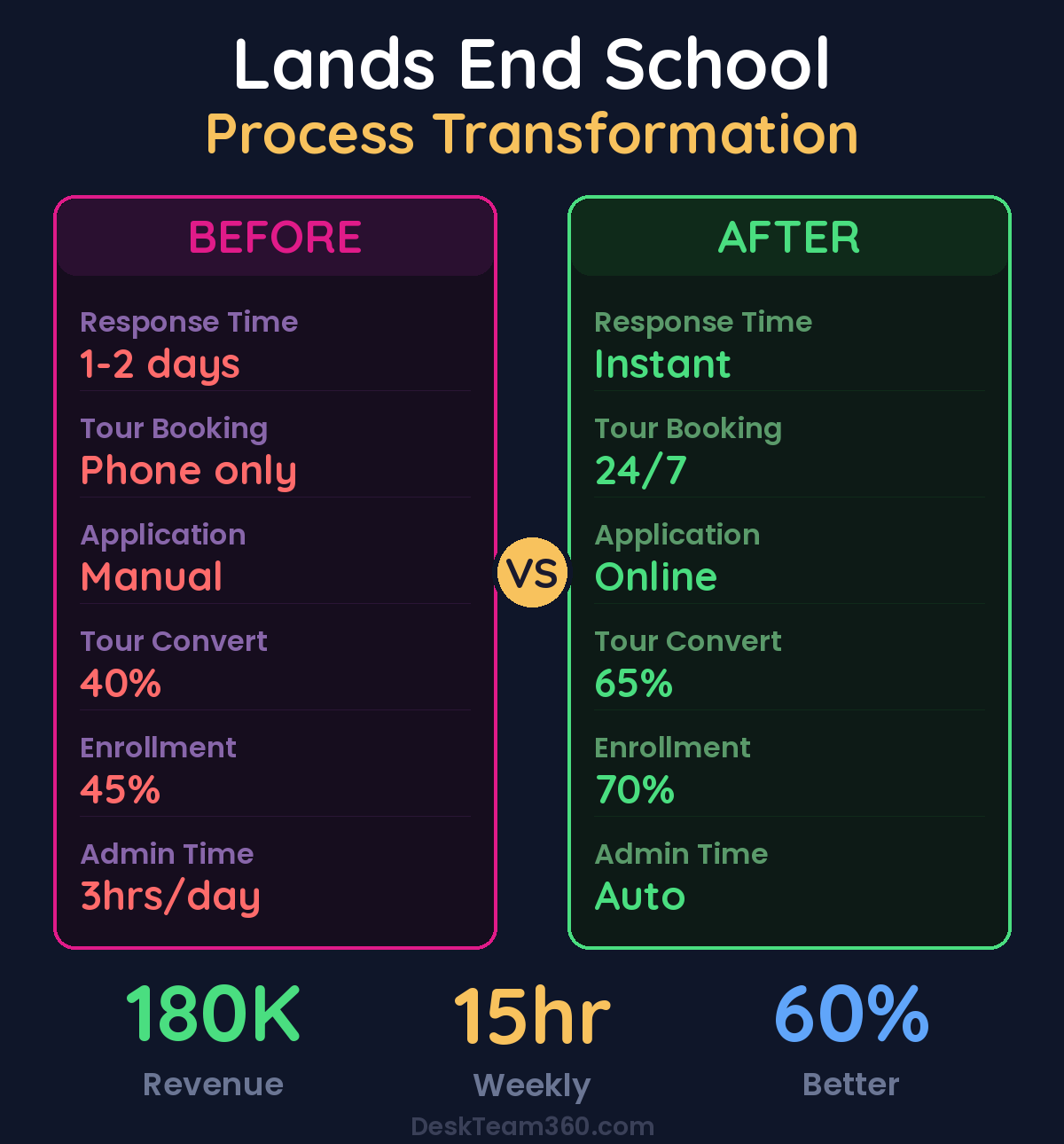
Before our system, parents had to call during business hours to schedule a tour. If no one answered, they’d try a competitor instead. After our system, parents could book tours 24/7 through the website, automatically connecting to the school’s calendar system.
The booking system captured key information up front so staff knew exactly what to prepare for each tour. It sent confirmation emails with directions and what to expect. It even sent reminder emails the day before so fewer families no-showed.
Pro tip: Any business that relies on scheduled appointments should automate the booking process. The 11pm website visitors who can’t wait until tomorrow to book something are often your most motivated prospects.
Application Management That Actually Works
The old process was completely manual. Parents would download a PDF, print it, fill it out by hand, and drop it off or mail it in. Applications got lost. Follow-up was inconsistent. There was no way to track which families were in what stage of the enrollment process.
We built an online application system that guided families through each step. Required documents were clearly listed with upload functionality. The system automatically moved completed applications into a review queue for staff. Parents got status updates via email without having to call and ask.
Most importantly, we built waitlist management directly into the system. When a spot opened up, the system automatically notified the next families in line instead of leaving it up to someone to remember to make those calls.
Communication Channels That Work for Busy Parents
Here’s something most schools get wrong: they assume all communication should go through the main office. But parents are juggling work calls, client meetings, and pick-up logistics. They need multiple ways to get information quickly.
We set up dedicated communication channels for different types of requests. Quick questions got answered through an online portal. Urgent issues had a direct line to the appropriate staff member. Regular updates went out via email newsletter so parents weren’t calling to ask about the same information over and over.
What Happened After We Launched
The results weren’t subtle. Within six months of launching the new system, parent satisfaction scores increased significantly. More importantly, enrollment inquiries increased by 40% because the friction had been removed from the initial contact process.
Staff productivity improved dramatically. Instead of spending their time on routine scheduling and information requests, they could focus on the educational program and building relationships with families. The administrative burden that was eating up their time got absorbed by the automated systems.
Parent engagement increased too. When families could easily access information about their child’s day, upload required documents, and communicate with teachers, they felt more connected to the school community. This was especially important during COVID when in-person interaction was limited.
Tour conversion rates improved by 60% because every family that visited received consistent follow-up and clear next steps.
The Technical Implementation
From a technical standpoint, this wasn’t rocket science. We integrated their existing calendar system with online booking software. We built custom forms that fed into their student management system. We set up automated email sequences that triggered based on where families were in the enrollment process.
The key was mapping out every touchpoint in the parent journey and identifying where automation could improve the experience. When someone fills out a tour request form, what should happen next? When an application is submitted, who needs to be notified? When a family is added to the waitlist, how do they stay engaged until a spot opens up?
Every business has these customer journey touchpoints. Most just haven’t mapped them out and systematized them. Our guide on customer onboarding best practices covers the framework we use for this type of process design.
Integration With Existing Systems
One thing that made this project successful was working with their existing tools instead of forcing them to adopt completely new systems. They already had a calendar system they liked. They already had a payment processor they trusted. They already had an email platform for newsletters.
Instead of ripping everything out and starting over, we built connections between these systems so data flowed automatically. When someone booked a tour, it appeared in the existing calendar. When they submitted an application, it created a record in the existing student management system. When they made a payment, it updated the existing accounting software.
Integration beats replacement every time. Change is hard for teams. If you can improve their experience without forcing them to learn entirely new software, adoption rates are much higher.
Lessons for Other Service-Based Businesses
The Lands End School project illustrates principles that apply to any business where customer communication is critical. Law firms, medical practices, consultancies, agencies, all face similar challenges when trying to deliver premium service at scale.
Automate the Routine, Humanize the Important
The biggest mistake service businesses make is trying to automate everything or automating nothing. The sweet spot is automating routine processes so your team can focus on high-value interactions.
Scheduling, document collection, status updates, and basic information sharing should be automated. Complex problem-solving, relationship building, and strategic decisions should stay human. When you get this balance right, customers feel like they’re getting more attention, not less.
Multiple Communication Channels for Different Needs
Your customers have different communication preferences depending on the situation. Some prefer email for non-urgent requests. Others want text messages for quick updates. Some need phone calls for complex issues.
Building communication systems that match the urgency and complexity of different request types makes everyone’s life easier. Understanding customer service response time expectations helps you design these systems correctly.
Data Collection That Serves a Purpose
Every form field you ask customers to fill out should have a clear purpose in improving their experience. If you’re collecting information just to have it, you’re adding friction for no reason.
The Lands End School application process collected specific information about each child’s learning style, dietary restrictions, and developmental milestones. This wasn’t bureaucracy for its own sake; it allowed teachers to prepare a more personalized experience for each new student.
Pro tip: If you can’t explain why you need a piece of information and how it improves the customer experience, don’t ask for it. Every additional field reduces completion rates.
The ROI of Better Customer Systems
Let’s talk numbers, because this is where the business case gets compelling. Before our project, Lands End School was losing about 30% of tour inquiries to communication friction. People would request information, not hear back quickly enough, and go somewhere else.
After implementation, their inquiry-to-tour conversion rate increased from 40% to 65%. Their tour-to-enrollment conversion rate increased from 45% to 70%. When you’re talking about customers who pay $24,000 per year in tuition, those percentage improvements translate to significant revenue growth.
The administrative time savings were equally impressive. Staff members who previously spent 2-3 hours per day on scheduling and basic communication could redirect that time to educational programming and parent relationship building.
Total annual revenue impact: $180,000 from improved conversion rates plus 15 hours per week of staff time recovered for higher-value activities.
Related reading: E-Commerce Website Cost: Real Breakdown From Shopify to Custom Builds.
For industry research and benchmarks, check out Clutch.co.
Why Most Businesses Don’t Fix These Problems
If the benefits are so clear, why don’t more businesses systematize their customer communication? I see three main reasons.
First, the problems develop gradually. When you’re small, manual processes work fine. By the time they’re clearly broken, you’re too busy putting out fires to step back and redesign them. You end up adding band-aid solutions instead of fixing the underlying issues.
Second, most business owners underestimate the technical complexity. Building these systems requires understanding customer journey mapping, business process automation, and systems integration. It’s not just “build a website,” it’s “design a customer experience.”
Third, the upfront investment feels expensive until you calculate the cost of not doing it. Every lost customer due to communication problems costs thousands in lifetime value. Every hour your team spends on manual processes is time they can’t spend on growth activities.
The Broader Lesson About Business Systems
The Lands End School project is really a case study about business systems thinking. Most companies focus on individual tools and tactics without considering how everything connects to create the overall customer experience.
Your website, your booking system, your email platform, your payment processor, your CRM, they’re all touchpoints in a larger customer journey. When these systems don’t talk to each other, customers feel the friction. When they’re properly integrated, the experience feels seamless and professional.
This applies whether you’re running a preschool, a law firm, a marketing agency, or any other service business. The specific tools matter less than the strategic thinking about how to design customer experiences that scale. Our approach to business process automation covers the methodology we use for this type of systems design.
Getting Started With Your Own Customer Experience Overhaul
If you’re dealing with similar communication challenges in your business, start by mapping your current customer journey from initial contact through project completion or service delivery. Identify every touchpoint where customers have to wait for information, repeat themselves, or deal with unnecessary complexity.
Those friction points are your automation opportunities. Some can be solved with simple process changes. Others require technical integration between systems. A few might need custom development work. But the ROI on fixing these issues is almost always positive within the first year.
At DeskTeam360, we’ve built customer experience systems for businesses ranging from solo consultants to teams of 50+. We understand the technical requirements and the business process design needed to create systems that actually improve operations instead of adding complexity.
The goal isn’t just to look more professional, it’s to operate more efficiently while delivering a better customer experience. When you get this right, growth becomes much easier because your systems can handle increased volume without proportionally increasing your workload.
The Lands End School team put it best: “The whole process seemed so easy, I always knew what was going on which made it very easy for me.” That’s what good business systems do, they make complex operations feel simple for everyone involved.