📋 Table of Contents
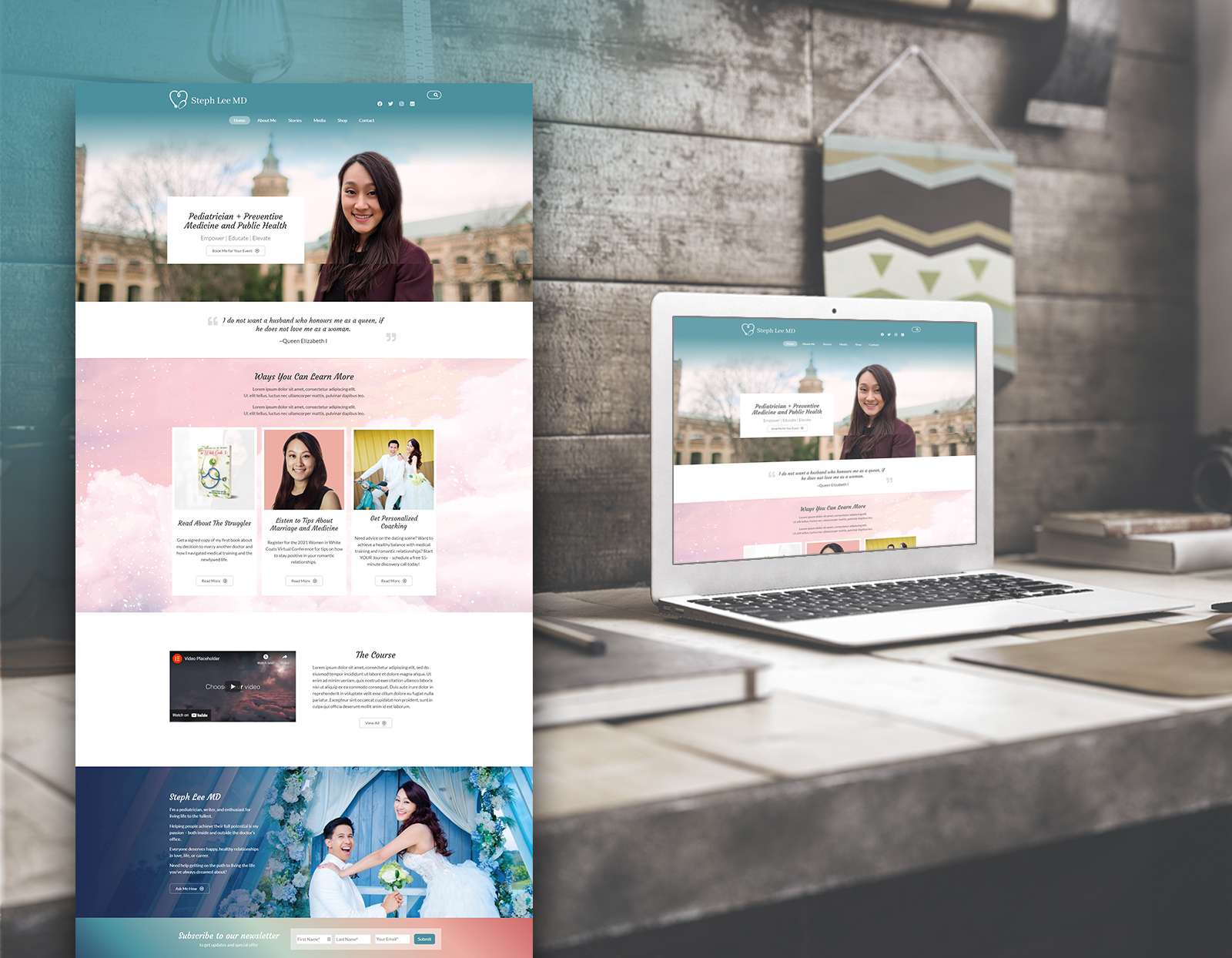
Steph Lee MD – Website Looked Better Than She Could’ve Imagined
When DIY Website Building Becomes a Full-Time Job You Never Wanted
Let’s talk about website exceeded expectations. Dr. Steph Lee thought building her own website would be straightforward. She’s a pediatrician, co-author of “Women In White Coats,” and clearly knows how to solve complex problems. How hard could a website be?
Turns out, extremely hard. And not because she lacked the intelligence or skills to figure it out, but because building a professional website that actually works requires about 40 different specialized skills that have nothing to do with being a doctor.
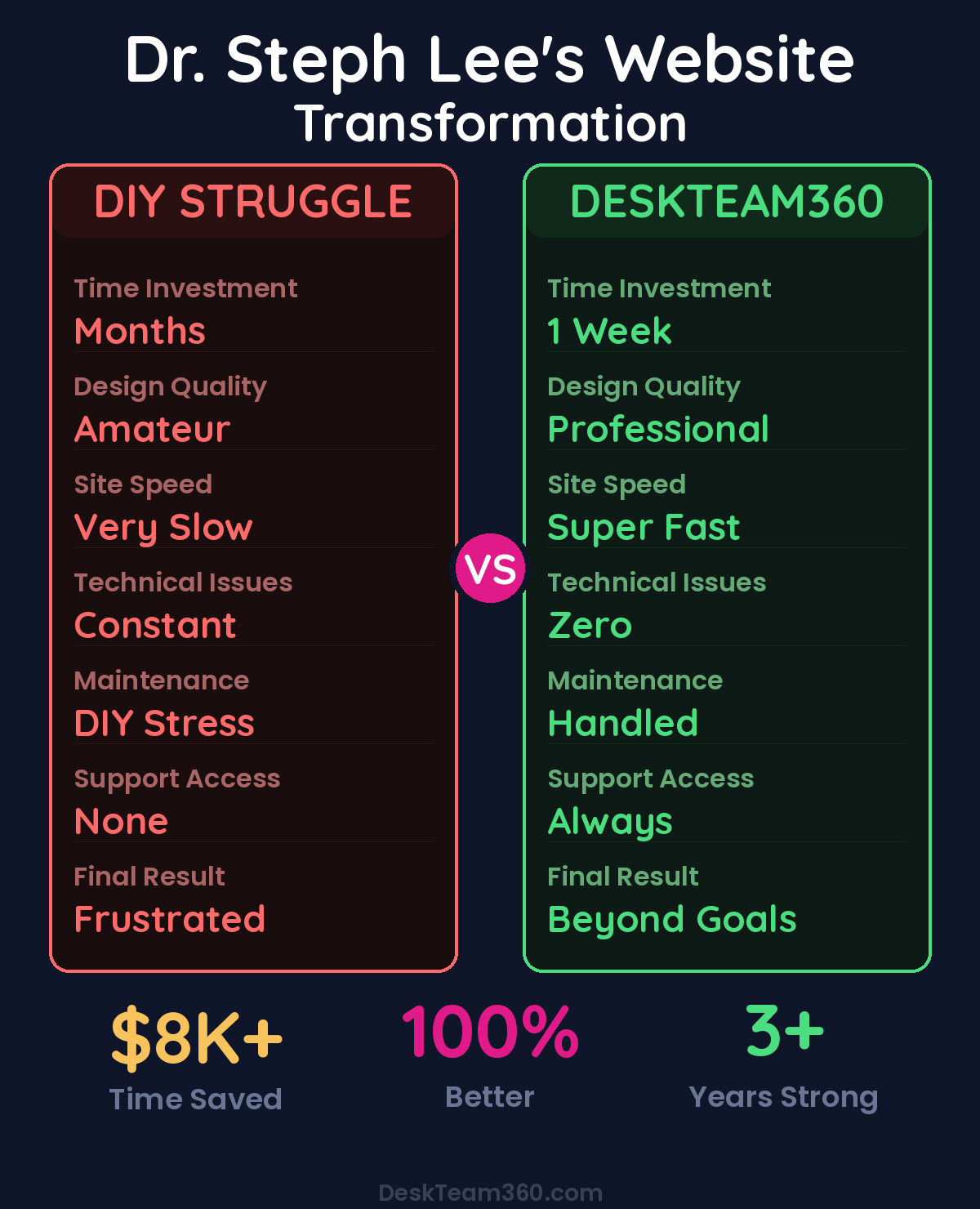
By the time she found us at DeskTeam360, she’d spent months wrestling with WordPress themes that looked nothing like the demo, graphics that screamed “amateur hour,” and a site so slow her patients probably aged waiting for it to load. Sound familiar?
Here’s what happened when we rebuilt her entire online presence from scratch, and why her experience reveals the hidden costs of DIY that most professionals never calculate until it’s too late.
The Real Cost of “Free” WordPress Themes
Steph started where most people do: with a free WordPress theme and big ambitions. She’s a good writer, understands her audience, and had clear ideas about what she wanted. On paper, this should have worked.
But free themes aren’t really free. You pay with your time, your sanity, and ultimately your credibility when the site looks exactly like what it is: a free template with amateur customizations.
“I struggled with coming up with a cohesive look,” Steph told us. “I wanted a logo that represented me and my brand, but I could have never created the graphics your team did.”
Watch out: Free themes often require premium plugins to function properly, can break with WordPress updates, and provide zero support when things go wrong. That “free” theme can easily cost $500+ in plugins and troubleshooting time.
The content flow was another problem entirely. Steph knew what she wanted to say, but translating that into a logical website structure that guides visitors where they need to go? That’s a completely different skill set.
“I struggled with making the content flow so that it was easy for people to understand what I do and where to go on my site to read my content.”
This isn’t a personal failing, it’s a professional reality. User experience design takes years to master. Expecting someone to nail it on their first attempt is like expecting someone to perform surgery because they watched a YouTube video.
The Performance Problem Nobody Warns You About
But the biggest issue wasn’t visual, it was technical. Steph’s site was painfully slow, and she couldn’t figure out why.
“Before I worked with DeskTeam360, my website was really slow. I started to look into getting help when I started getting overwhelmed.”
Website speed isn’t just a nice-to-have feature, it’s a business requirement. Google uses page speed as a ranking factor. Visitors abandon sites that take more than three seconds to load. Every extra second of load time costs you potential clients who click away before seeing what you offer.
A one-second delay in page load time reduces conversions by 7% on average. For a practice generating $500K annually, that’s $35,000 in lost revenue.
Fixing website speed requires understanding hosting, image optimization, caching, database queries, and about fifteen other technical factors. Most professionals don’t have time to become web performance experts on top of running their actual business.
That’s when Steph realized the same thing hundreds of our clients have realized: sometimes the smartest business decision is admitting what you don’t know and hiring people who specialize in exactly what you need.
Why She Chose DeskTeam360 (Hint: It Wasn’t Price)
Steph didn’t shop around for the cheapest option. She’d already spent months learning the hard way that cheap upfront costs expensive later when you factor in time, frustration, and opportunity cost.
“My decision was easy to choose DeskTeam360 when knowing the people who referred me to you and their sites looked so good.”
This is something we see consistently. Our best clients don’t come from price comparisons, they come from referrals. Someone in their network had a website that actually worked, looked professional, and didn’t require constant maintenance. They asked who built it, got our name, and made the call.
Smart business owners recognize quality when they see it. They also recognize that their time is worth more than saving a few hundred dollars on something as important as their online presence.
Pro tip: When evaluating web design services, look at their recent client work in your industry. Can you tell immediately what the business does? Does the site load quickly? Does it look professional on mobile? These basics matter more than flashy design trends.
The Logo and Brand Foundation
We started with Steph’s brand identity because you can’t build a house without a foundation. Her existing “logo” was basically text in a default font. It communicated nothing about her personality, expertise, or approach.
Our process is straightforward but thorough. We asked about her personality, her target audience, her unique approach to coaching relationships, and what emotions she wanted her brand to evoke. We also discussed color preferences and looked at brands she admired in other industries.
Then we designed three completely different logo concepts. Not variations of the same idea, but three distinct directions she could take her brand. Each one told a different story about who she is and what she offers.
Steph picked her favorite and we refined it based on her feedback. After one more round of revisions, we had a logo that actually represented her brand instead of looking like default WordPress.
This process took exactly one week. Compare that to the months she spent trying to create something herself that never quite looked right. Sometimes expertise is just faster, even when you factor in communication and revisions.
The Website Design and Development Process
With the brand locked in, we moved to the website. We used the same approach: three distinct design directions, each one built around the logo and brand identity we’d just established.
The designs weren’t generic templates with her content dropped in. Each one was custom-built around her specific content, services, and business goals. We considered how her ideal clients think, what information they need to make a decision, and how to guide them naturally from landing on the site to taking action.
Custom design means thinking through the entire user journey. Where do visitors land? What questions do they have? What convinces them to choose you over alternatives? How do they contact you when they’re ready? Every page and element serves a specific purpose.
Steph reviewed the three options and picked her favorite. We went through another revision cycle to refine the details, then moved into development.
Development is where the design becomes a functioning website. We built it on a performance-optimized hosting environment, integrated all the necessary functionality, and tested everything across devices and browsers.
Total timeline from approved design to finished website: just over a week. During that time, Steph could focus on her practice and coaching business instead of figuring out why her contact form wasn’t working or why her mobile layout looked broken.
The Results: Better Than She Could Have Imagined
When we walked through the finished site with Steph, her reaction summed up exactly why professionals choose to work with specialists instead of doing everything themselves.
“You really helped make my website look so much better, really the biggest win was seeing that it looked better than I could have imagined.”
That’s not false modesty, that’s the difference between amateur execution and professional expertise. When you hire people who build websites every day, you get results you couldn’t achieve yourself regardless of how much time you invested.
The technical improvements were just as significant. “Now because I’m hosting the site with you my website speed is really fast.” Performance optimization isn’t an accident, it’s the result of choosing the right hosting environment, optimizing images properly, implementing caching correctly, and dozens of other technical details.
The ecommerce functionality she needed worked perfectly from day one. The site loaded quickly for her visitors. The design conveyed professionalism and expertise. Most importantly, she never had to chase us down for updates or answers. Our guide on professional website essentials covers what separates amateur sites from business-grade platforms.
The Hidden Costs of DIY Website Building
Looking back, Steph’s experience reveals the true cost of trying to build a professional website yourself. It’s not just the money spent on themes, plugins, and tools. It’s the opportunity cost of time that could have been spent on revenue-generating activities.
Let’s do the math. Steph spent months working on her site. As a practicing physician and coach, her time is worth at least $200 per hour. If she spent just 40 hours total on website work (probably a conservative estimate), that’s $8,000 in opportunity cost.
Add the frustration, the suboptimal results, and the ongoing maintenance burden, and the DIY approach wasn’t saving money, it was costing significantly more than professional service would have.
This pattern repeats constantly. Professionals with valuable skills try to save money by doing work outside their expertise, not realizing they’re trading dollars for pennies. Understanding how to calculate the true value of your time changes how you think about these decisions.
What Made the Difference in Service Quality
Steph highlighted something that separates professional service providers from the rest: communication and reliability.
“I knew you guys were going to do a good job when I didn’t have to chase you down to answer my questions or to get updates.”
This seems basic, but it’s surprisingly rare in the web design industry. Most providers are either unresponsive (leaving clients wondering what’s happening) or overcommunicate with unnecessary check-ins that waste everyone’s time.
Professional service means proactive communication about timeline and progress, quick responses to legitimate questions, and clear expectations about what happens when. You shouldn’t have to wonder whether your project is on track or guess when you’ll see results.
Pro tip: When interviewing web design services, ask about their communication process and timeline. How often will you receive updates? What happens if you have questions? How do revisions work? Red flags include vague answers or promises that sound too good to be true.
The Long-Term Value of Professional Web Design
Steph’s website launched in January 2021. Three years later, it’s still performing exactly as intended. No major technical issues, no security problems, no performance degradation. That’s what happens when a site is built correctly from the foundation up.
Compare that to the typical DIY website lifecycle: initial launch, ongoing tweaking to fix issues, periodic major overhauls when plugins break or security problems emerge, and eventually a complete rebuild when the accumulated problems become unmanageable.
Professional design isn’t just about looking good on launch day. It’s about creating a digital foundation that supports business growth for years without requiring constant attention.
The hosting performance Steph mentioned is part of this long-term value. We don’t just build websites and hand them off to budget hosting providers. The hosting environment is optimized for the specific requirements of professional service businesses.
Fast loading times, reliable uptime, automatic backups, security monitoring, and performance optimization all happen behind the scenes. That’s infrastructure Steph never has to think about, allowing her to focus entirely on serving her clients.
For a deeper dive, see our guide on best 48hourslogo alternatives: better options for serious businesses.
For industry research and benchmarks, check out Forbes Agency Council.
Why Referrals Drive Our Best Relationships
Steph came to us through a referral, and that’s how we prefer to work. When someone recommends DeskTeam360, they’re vouching for our work quality, communication, and results. That creates accountability and trust from day one.
Clients who find us through referrals also tend to have realistic expectations about timeline, investment, and the value of professional service. They’ve usually already tried the DIY approach or worked with lower-tier providers, so they understand the difference quality makes.
The relationship dynamic is different too. Instead of trying to convince someone why professional web design matters, we’re working with clients who already understand the value and want to move forward efficiently.
For more insights on building long-term client relationships, our post on client retention strategies explores what creates lasting business partnerships.
Her Advice for Other Professionals
Steph’s recommendation to other professionals considering professional web design is characteristically direct:
“Take a look at DeskTeam360’s examples and know that you’ll have peace of mind knowing that your website will be done right and efficiently so you can spend your time doing something else.”
Peace of mind. That’s what she valued most about the entire experience. Not having to worry about technical details, design decisions, or whether the final result would actually work for her business.
When you’re running a practice or business, your website should be an asset that works in the background, not a ongoing project that demands constant attention. Professional service delivers that peace of mind along with the technical and design expertise.
The Strategic Value of Professional Online Presence
Steph’s transformation from frustrated DIY website builder to confident business owner with a professional online presence illustrates a broader principle about business strategy.
Your website isn’t just a marketing tool, it’s a business asset that either supports your growth or holds it back. A slow, unprofessional site costs you credibility with potential clients. A confusing layout costs you conversions. Technical problems cost you time that should be spent serving clients.
The investment in professional design pays dividends every day through faster loading, better user experience, higher conversion rates, and reliable performance. More importantly, it frees up your time and mental energy for high-value activities that only you can do.
Understanding how to calculate website ROI helps put the investment in perspective. For most professional service businesses, a website that converts even 10% better pays for itself within months through increased inquiries and client acquisition.
Making the Right Decision for Your Business
Steph’s experience demonstrates that the choice between DIY and professional service isn’t really about money, it’s about recognizing where to invest your time and energy for maximum return.
If you’re a professional service provider struggling with a slow, outdated, or ineffective website, you’re facing the same decision Steph faced. You can continue trying to fix it yourself, spending nights and weekends learning skills you’ll use once, or you can work with specialists who deliver professional results efficiently.
The professionals who thrive long-term are those who focus relentlessly on their core expertise while partnering with specialists for everything else. That’s how you build a business that scales beyond what you can personally manage.
For guidance on evaluating your current online presence, our website audit checklist covers the key areas that impact performance and conversion rates.
At DeskTeam360, we’ve helped hundreds of professionals like Steph transition from DIY frustration to professional online presence. Our process is designed specifically for busy professionals who want results without the learning curve, technical headaches, or ongoing maintenance burden.