
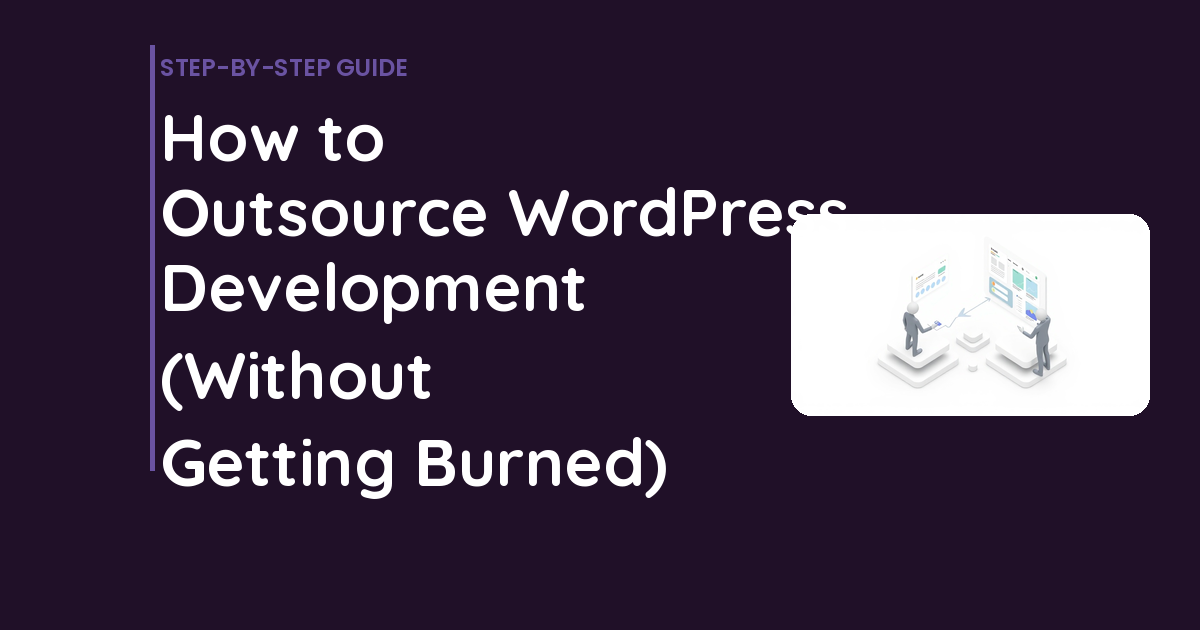
How to Outsource WordPress Development (Without Getting Burned)
Why WordPress Development Gets Outsourced Wrong
When you outsource wordpress development, you free up your team to focus on what actually moves the needle. WordPress powers 43% of all websites on the internet. That makes it the most outsourced development platform in existence. It also means there are thousands of developers claiming to be “WordPress experts” who couldn’t build a proper custom theme if their life depended on it.
📋 Table of Contents
I’ve been managing outsourced WordPress projects for 12 years at DeskTeam360. I’ve seen brilliant implementations that transformed businesses overnight. I’ve also seen $20,000 disasters that took months to fix. The difference comes down to knowing what to outsource, who to hire, and how to manage the process without getting burned.
Let me show you exactly how to do this right, because the stakes are higher than you think. A bad WordPress project doesn’t just waste money, it can destroy your business reputation, tank your search rankings, and leave you with a website that’s harder to fix than rebuild.
Why WordPress Actually Makes Perfect Outsourcing Sense
Not every technology platform is outsource-friendly. Try delegating a custom React application or enterprise Salesforce implementation to a freelancer. You’ll spend six months explaining your architecture before they write their first line of code.
WordPress is different, and these differences matter. The platform has a standardized architecture that any competent developer understands immediately. Themes, plugins, custom post types, hooks, filters, the WordPress loop. These aren’t proprietary concepts your developer needs to learn, they’re fundamental WordPress knowledge.
This means you can swap developers mid-project without losing months of context. Compare that to custom-built applications where changing developers usually means starting over.
The documentation advantage is massive too. WordPress has better developer documentation than any other CMS platform. Between the official codex, community tutorials, Stack Overflow answers, and GitHub repositories, any problem your developer encounters has probably been solved before. This translates directly to fewer billable hours spent troubleshooting.
WordPress’s modular plugin architecture means you can outsource pieces of functionality independently. Need a custom booking system? Outsource that plugin specifically. Want a membership area built? That’s a separate project. You don’t need to hand over control of your entire website to implement one new feature.
Free 5-Minute Video
See How DeskTeam360 Works in Under 5 Minutes
Watch the short video and see exactly how we handle design, development, and marketing implementation — so you don't have to.
Watch the Video →
What WordPress Work You Should Always Outsource
Here’s where most business owners get the scope wrong. They either try to outsource content updates that they could handle themselves, or they attempt complex development work that requires real expertise.
Custom theme development should always be outsourced unless you have a senior WordPress developer on staff. Building a custom theme requires design skills, PHP coding proficiency, responsive development expertise, and deep knowledge of WordPress template hierarchy. This isn’t weekend hobby work.
Plugin development falls into the same category. Custom plugins require understanding WordPress hooks and filters, proper database integration, security best practices, and PHP proficiency. The security implications alone make this worth outsourcing to specialists.
Performance optimization is specialized work that pays for itself immediately. WordPress speed optimization involves server configuration, caching strategies, image optimization, database cleanup, and code profiling. A good optimization project can improve page speeds by 40-60%, which directly impacts search rankings and conversion rates.
Pro tip: Always outsource WooCommerce implementations. E-commerce adds layers of complexity that will consume weeks if you try to figure it out yourself. Payment gateways, shipping calculations, tax rules, inventory management, product variants, abandoned cart recovery. Get someone who’s built dozens of online stores before.
Security hardening requires staying current with WordPress vulnerabilities, implementing proper authentication protocols, configuring file permissions, setting up firewall rules, and monitoring for malware. The cost of getting hacked is infinitely higher than the cost of proper security implementation.
Where to Find WordPress Developers Who Won’t Burn You
You’ve got five main options for finding WordPress talent, and the quality variation is staggering.
Freelance marketplaces like Upwork, Toptal, and Freelancer give you access to thousands of developers at every price point. The variety is the advantage. The quality vetting is entirely your responsibility, which is the massive disadvantage. After hiring from these platforms extensively, my success rate hovers around 30%. That means 7 out of 10 freelancers I tried were either unreliable, produced mediocre work, or disappeared mid-project.
WordPress-specific agencies like 10up, WebDevStudios, or Human Made deliver consistent quality because they specialize exclusively in WordPress. But you pay agency prices for that consistency. $150-$250 per hour is standard, which means a full website build runs $20,000-$100,000 depending on complexity.
Offshore development teams offer significant cost advantages. Teams in India, Philippines, Eastern Europe, and Latin America charge $15-$60 per hour depending on location and experience level. The quality can be excellent, but managing communication across timezones and cultural differences requires more oversight than working with local developers.
Design and development subscription services bundle WordPress development with ongoing support, which solves the biggest outsourcing problem: what happens after launch. WordPress sites need constant updates, security monitoring, and feature additions. Subscription models handle this seamlessly.
The best WordPress developers come through referrals. Ask other business owners in your network. Post in industry Slack channels or Facebook groups. The developers who are booked solid through referrals rarely need to advertise on freelance platforms.
Referrals work because WordPress development success depends as much on process management and communication as technical skills. When another business owner vouches for someone, they’re vouching for the entire working relationship, not just code quality.
The Real Cost of WordPress Development
WordPress development pricing varies wildly based on who you hire and how you structure the relationship. Here’s what you’re actually paying for different approaches.
Freelancers typically charge $3,000-$8,000 for custom theme builds, $1,000-$5,000 for custom plugins, and $2,000-$10,000 for WooCommerce implementations. Add $300-$1,500 for speed optimization and $500-$2,000 for security audits. Monthly maintenance runs $100-$500 depending on the scope.
Agencies charge significantly more for the same deliverables. Custom themes run $10,000-$30,000, plugins cost $5,000-$15,000, and WooCommerce setups range from $8,000-$25,000. Speed optimization costs $1,500-$5,000, security work runs $2,000-$5,000, and ongoing maintenance starts at $500-$2,000 monthly.
Subscription services bundle everything into a flat monthly rate. All development work, maintenance, updates, security monitoring, and support gets included without hourly tracking or project quotes. The math works especially well if you have ongoing WordPress needs, and you always do. There’s always the next feature, the next optimization, the next integration.

How to Vet WordPress Developers Without Getting Fooled
Good WordPress developers and mediocre ones talk almost identically during sales conversations. The differences only become apparent when you know what questions to ask and what red flags to watch for.
Ask for WordPress-specific portfolio examples, not just general web development work. Have them walk you through a technical challenge they solved on a WordPress project. If they can’t speak specifically about WordPress development practices, they’re generalists trying to position themselves as specialists.
Request code samples if possible. Clean, well-commented code that follows WordPress coding standards tells you everything about their professionalism. Proper function naming, security practices, and WordPress-specific functions instead of raw PHP separates experts from amateurs.
Watch out: Never hire someone for a major project without testing them on a smaller one first. Start with a $500-$1,000 task to evaluate their communication, timeline management, and code quality. Build trust incrementally. The most expensive WordPress mistakes happen when you give someone a $20,000 project based on a portfolio and a phone call.
Test their communication skills by sending a detailed project brief and evaluating their response. Good developers ask clarifying questions, identify potential issues you hadn’t considered, and respond within 24 hours. Poor communicators are the #1 cause of failed outsourcing relationships, regardless of technical skill.
Ask about their development process. Professional WordPress developers follow defined workflows: discovery, wireframing, design approval, development, testing, and launch. If they jump straight from “what do you need?” to “here’s the invoice,” that’s a massive red flag.
Five Ways WordPress Outsourcing Goes Wrong
I’ve watched the same mistakes destroy WordPress projects over and over again. Here’s how to avoid each one.
Choosing based on price alone is the most expensive mistake you can make. The $500 WordPress developer and the $5,000 WordPress developer are not delivering the same product. The cheap option often costs $15,000+ in fixes when security vulnerabilities surface, performance tanks, or the code breaks during updates.
Providing vague project requirements guarantees scope creep and missed expectations. “I want a modern website” tells a developer nothing actionable. “I need a 12-page WordPress site with custom portfolio sections, WooCommerce integration for digital products, Mailchimp newsletter integration, and booking calendar functionality” gives them something to work with.
Skipping staging environments is development malpractice that can destroy your live website. Always develop on staging servers, never on production sites. If your developer wants to make changes directly to your live site, fire them immediately.
WordPress sites with proper security practices are 90% less likely to get hacked than sites using default configurations.
Ignoring security until something goes wrong costs infinitely more than prevention. Make sure your developer implements limited admin accounts, strong authentication, proper file permissions, regular updates, and security monitoring. Our guide on website maintenance costs covers the ongoing security investment needed.
Having no ongoing maintenance plan is like buying a car and never changing the oil. WordPress needs constant updates for core files, plugins, themes, and PHP versions. Security patches get released regularly. If you outsource the build but ignore maintenance, you’re building on a foundation that will crumble.
Setting Up an Outsourcing Workflow That Actually Works
After managing thousands of WordPress projects, here’s the workflow that prevents most problems before they start.
For industry research and benchmarks, check out Clutch.co.
Document everything before development begins. Create a project brief that covers business goals, target audience, required pages, functionality specifications, design preferences with 3-5 example sites, content status, and realistic timelines. The more specific you are upfront, the fewer revisions you’ll need later.
Set up proper infrastructure before your developer writes the first line of code. This means staging environments, version control through Git, project management tools for tracking progress, and shared access to design files. Professional developers expect this infrastructure. Amateur ones don’t know why it matters.
Establish regular review checkpoints instead of waiting until launch to provide feedback. Weekly or bi-weekly progress reviews where developers demo functionality and you provide input prevent expensive rewrites. Early feedback is cheap feedback. Late feedback is catastrophic feedback.
Test everything ruthlessly before launch. Check functionality on multiple devices and browsers. Test all contact forms and integration points. Verify mobile responsiveness. Run speed tests. Test with real users, not just yourself. Understanding factors that increase bounce rates helps focus testing efforts.
Plan launches methodically with checklists that cover DNS propagation, SSL certificates, 301 redirects from old URLs, search console verification, analytics setup, and backup protocols. Rushed launches create problems that take weeks to fix.
When NOT to Outsource WordPress Development
Outsourcing isn’t always the right answer, even for WordPress projects. Here’s when you should pause and reconsider.
Don’t outsource if your business model changes weekly. If you’re still testing product ideas, refining your target audience, or experimenting with messaging, a custom WordPress build is premature. Use simple templates until your business strategy stabilizes.
Don’t outsource mission-critical custom applications built on WordPress. While WordPress can be extended significantly, it was designed as a content management system. If WordPress is the foundation for a complex SaaS product or web application, you need in-house developers who understand the full technical architecture.
Don’t outsource if you can’t commit to active participation. WordPress outsourcing requires your input for briefs, design feedback, content approval, and feature testing. If you’re too busy to participate meaningfully, projects stall regardless of developer quality.
For everything else, outsource aggressively. WordPress development is the most mature, well-supported, and cost-effective outsourcing opportunity in web development. The talent pool is massive, the processes are proven, and the results are predictable when you follow the right approach.
The WordPress Development Decision
WordPress outsourcing works when you treat it like any other business investment. Define clear requirements. Vet providers thoroughly. Start with small projects to build trust. Set up proper workflows. Plan for ongoing maintenance.
The businesses that succeed with WordPress outsourcing understand that the cheapest option is rarely the best value. They invest in quality developers, proper processes, and long-term maintenance relationships. The result is websites that drive business growth instead of creating ongoing headaches.
Whether you hire freelancers, agencies, or subscription services, the fundamentals remain the same. WordPress development is too important to wing it, too complex to handle in-house for most businesses, and too valuable to compromise on quality. Done right, it’s one of the best investments you can make in your business.
Free Tool
How Much Is Freelancer Management Really Costing You?
Most agency owners have never done this math. Plug in a few numbers and see your real cost in 2 minutes.
Calculate Your Hidden Costs →